
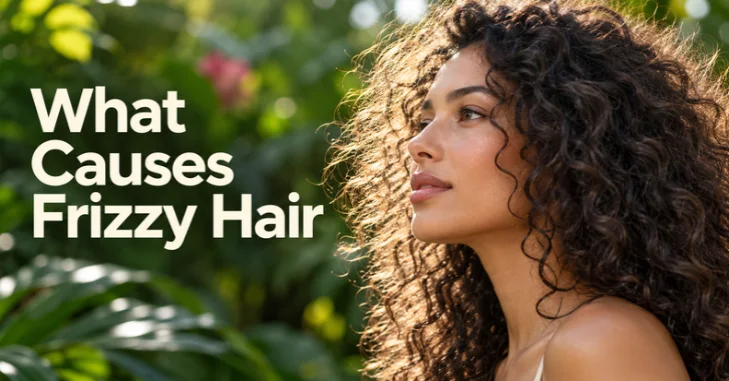
If you’re wondering what causes frizzy hair, the answer usually involves moisture moving unevenly through each strand. Dryness, humidity, damage, friction, and styling habits can all disturb the hair’s protective outer layer. Your natural texture and porosity can also make frizz appear faster.
Quick answer: Frizz develops when the hair cuticle becomes raised, rough, or damaged. Moisture then moves unevenly through the strand, causing swelling and separation. Humidity, dryness, heat, chemicals, overwashing, and friction are among the most common triggers.
| Frizz trigger | What happens | Common clue | Helpful first step |
|---|---|---|---|
| Dryness | Hair loses moisture and becomes rough. | Hair feels dry even indoors. | Add conditioner and reduce harsh cleansing. |
| Humidity | Water enters porous strands. | Frizz rises with humidity. | Use smoothing products and protective styling. |
| Heat damage | High temperatures weaken the cuticle. | Ends feel rough or brittle. | Lower heat and use protection. |
| Chemical treatments | Coloring or relaxing increases porosity. | Frizz worsens after processing. | Increase conditioning and reduce treatments. |
| Friction | Rubbing roughens the hair surface. | Flyaways follow towel drying or brushing. | Handle hair more gently. |
| Overwashing | Natural oils are removed too often. | Hair feels stripped after washing. | Adjust washing frequency. |
| Natural texture | Curves can slow oil distribution. | Waves or curls lose definition. | Use moisture to hold together. |
Key Takeaways
- Frizz is usually linked to an uneven or raised hair cuticle.
- Humidity makes porous or damaged strands especially difficult to control.
- Dry hair often needs moisture, while humidity-related frizz may need protection and hold.
- Heat, bleaching, coloring, rough drying, and excessive brushing can increase damage.
- Curly and coily textures can be more susceptible because scalp oils travel differently along curved strands.
- The best routine depends on when your frizz appears and how your hair feels.
What Causes Frizzy Hair in the First Place?
Hair has an outer protective layer called the cuticle. Healthy cuticle scales sit relatively flat and help control moisture movement. When those scales become uneven, strands can swell, separate, and lose their smooth appearance.
The American Academy of Dermatology notes that damaging styling practices can leave hair brittle, rough, and frizzy. Frequent heat, aggressive brushing, and repeated tension can contribute to damage. Reducing those stresses can help protect the strand over time.
Frizz does not automatically mean your hair is unhealthy. Natural curl patterns can create visible texture and flyaways without serious damage. The important question is whether your texture changed suddenly or feels increasingly dry and fragile.
1. Your Hair Is Too Dry
Dryness is one of the most common causes of frizz. Hair without enough lubrication can develop a rougher surface and increased friction. It may also react more noticeably when environmental moisture changes.
Frequent shampooing, strong cleansers, dry weather, and repeated heat can contribute to this problem. Conditioner helps coat the strands and can reduce friction during handling. Dermatologists also recommend leave-in conditioners for people experiencing dryness, tangles, flyaways, or frizz.
If dryness is your main trigger, your hair may feel rough before you even leave home. It may tangle easily and feel less flexible at the ends. A moisture-focused routine usually makes more sense than repeatedly adding strong styling products.
2. Humidity Changes the Hair’s Shape
Humid air contains more water vapor than dry air. Porous strands can absorb that moisture and experience changes inside the hair fiber. Those changes can disrupt a smooth blowout, curl pattern, or straightened style. Researchers explain that water can form hydrogen bonds with proteins inside hair. Increased moisture can therefore change the strand’s behavior and shape.
Damaged cuticles allow environmental water to enter more easily. This explains why your style can look polished indoors and expand after stepping outside. Humidity itself isn’t always the whole problem. Existing dryness or porosity often determines how strongly your hair responds.
3. Your Hair Has High Porosity or Existing Damage
Porosity describes how easily hair accepts and loses moisture. More porous strands have a less uniform protective surface. They can absorb environmental water quickly and lose internal moisture faster. Bleaching, coloring, chemical processing, sunlight, and repeated heat can increase surface damage.
Cleveland Clinic notes that prolonged ultraviolet exposure can damage the cuticle and leave hair drier or more brittle. Protecting processed hair from repeated stress can therefore matter beyond appearance. A useful clue is how quickly your hair becomes wet and dries again.
Rough ends, frequent tangles, and uneven texture can also accompany higher porosity. These signs do not provide a medical diagnosis, but they can guide gentler care.
4. Heat Styling Has Weakened the Cuticle
Flat irons, curling tools, and hot blow-drying can remove water quickly from the strand. Repeated high temperatures may leave the protective surface increasingly fragile. The result can be more roughness, breakage, and flyaways.
The American Academy of Dermatology recommends using flat irons on dry hair with low or medium heat. It also advises reducing how often you blow-dry your hair. Less frequent exposure gives damaged strands fewer opportunities for additional stress.
You do not necessarily need to stop heat styling completely. Start by lowering the temperature and increasing the time between sessions. Use heat protection when the product instructions specifically support that purpose.
5. Coloring, Bleaching, or Chemical Services Changed Your Hair
Chemical services deliberately alter the hair to create a new color, curl, or shape. That process can also make the fiber more porous or fragile. Frizz may become more noticeable after repeated bleaching or permanent chemical treatments.
If your texture changed after a salon service, focus first on reducing additional damage. Avoid stacking frequent heat sessions onto already processed strands. Consistent conditioning can also improve manageability while new hair grows.
Hair color can still be part of your personal style without constant processing. Styleliza’s guides to the Summer color season and Cool Winter palette can help you compare color families before changing your shade again. Fewer major color changes can also mean fewer chemical sessions.
6. Friction Is Roughing Up Your Strands
Friction happens when hair repeatedly rubs against towels, brushes, clothing, or other strands. That contact can disturb the surface and encourage tangles. Fragile hair may also break, creating shorter strands that appear as flyaways.
Rough towel drying is a common example. Dermatologists suggest wrapping hair instead of aggressively rubbing it after washing. They also recommend minimizing unnecessary brushing because excessive brushing can contribute to split ends.
Teasing and backcombing deserve similar caution because they intentionally create friction. If you enjoy highly textured styles, use them selectively rather than daily. Styleliza’s trad goth styling guide offers inspiration without requiring constant aggressive manipulation.
7. Your Washing Routine May Be Too Harsh
Washing removes dirt, oil, sweat, and product buildup from the scalp and hair. Problems can develop when cleansing also leaves the lengths consistently dry. Your ideal frequency depends on texture, scalp condition, activity level, and styling habits.
Very hot water can also leave dry or processed hair harder to manage. Lukewarm water is a gentler starting point for most routines. Apply shampoo mainly where cleansing is needed instead of aggressively rubbing the lengths together.
Conditioning after shampooing can reduce friction and improve manageability. Pay particular attention to the mid-lengths and ends if they feel dry. Fine hair may need lighter formulas, while coarser textures often tolerate richer conditioning.
How to Tell What Is Causing Your Frizz
You can learn a lot by noticing when the problem appears. Hair that expands outside may point toward humidity and porosity. Hair that already feels rough indoors may need more attention to dryness or damage.
| When frizz appears | Likely factor to investigate | What to change first |
|---|---|---|
| Immediately after washing | Cleansing, hot water, rough drying | Use gentler washing and drying. |
| After blow-drying | Heat or technique | Lower temperature and direct airflow downward |
| Only in humid weather | Porosity and environmental moisture | Add humidity protection and styling hold. |
| After bleaching or coloring | Chemical damage | Reduce processing and condition regularly. |
| After brushing | Friction or breakage | Brush less and detangle gently. |
| In dry winter weather | Dryness or static | Increase conditioning and reduce friction. |
| Mostly around broken ends | Mechanical or heat damage | Reduce stress and trim damaged ends when needed |
Do not assume every flyaway requires more oil. Heavy products can weigh down fine textures without correcting the real trigger. Start with the pattern you can observe, then change one part of your routine at a time.
How to Reduce Frizz Without Fighting Your Natural Texture
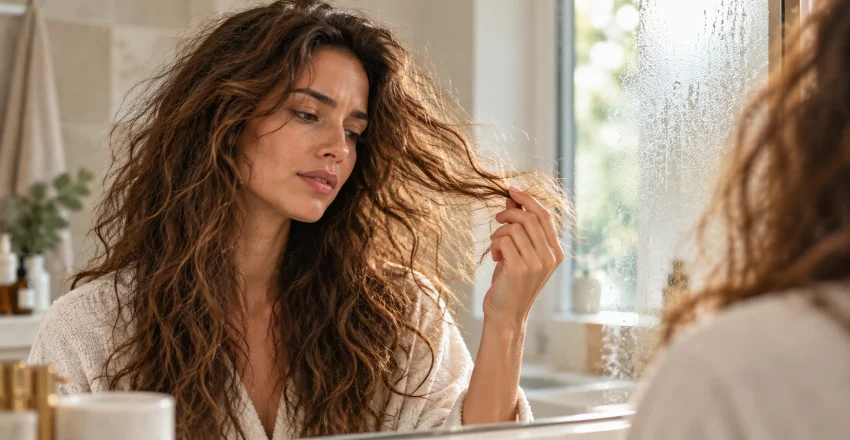
Begin with gentle cleansing and regular conditioning. Handle wet hair carefully because it can be vulnerable to breakage. If your hair tangles easily, use a detangling method suited to your texture. Drying technique also matters. Blot or wrap hair instead of rubbing it vigorously with a bath towel.
A microfiber towel or soft cotton T-shirt can reduce unnecessary friction during drying. Keep heat at the lowest temperature that gives you the result you need. Avoid repeatedly passing a flat iron over the same section. Give processed or brittle hair additional heat-free days whenever possible.
For humidity, use a styling product that combines conditioning with suitable hold. Wavy, curly, and coily styles often need enough hold to keep groups of hairs together. Straight styles may benefit from lightweight smoothing products that limit surface roughness.
Is Curly Hair Naturally More Prone to Frizz?
Curved strands can make it harder for scalp oils to travel evenly toward the ends. Those lengths may therefore feel drier than straighter hair. Curl separation can also make individual flyaways more visible. That does not mean curls should always look perfectly smooth. Some frizz creates volume and can be part of a healthy natural texture.
Focus on breakage, extreme dryness, and sudden changes rather than eliminating every stray strand. Your routine should support your preferred finish without forcing a different texture. Defined curls may need conditioning plus hold. A softer, fuller style may intentionally keep more natural separation.
When Frizz May Need More Than a Routine Change
Most frizz is a cosmetic hair-care concern. A sudden change accompanied by significant shedding, scalp symptoms, or unusual breakage deserves more attention. Those issues can have causes that styling products cannot address.
A board-certified dermatologist can assess the scalp and hair when you are concerned. The American Academy of Dermatology also recommends professional evaluation for ongoing hair-care concerns. Bring details about recent chemical services, medications, styling habits, and changes you have noticed.
Avoid relying on social media diagnoses for sudden hair changes. Photos cannot show every scalp or medical factor. Professional evaluation is especially sensible when breakage or hair loss becomes persistent.
Frequently Asked Questions
What causes frizzy hair even after conditioning?
Conditioner can improve smoothness, but it cannot remove every source of frizz. Humidity, high porosity, heat damage, or friction may still affect conditioned strands. Your drying and styling methods matter as much as the product itself.
Why does my hair get frizzy as soon as I go outside?
A rapid outdoor change often points toward humidity. Porous hair can absorb water from humid air and change shape. Protective styling products may help reduce that reaction.
Can too much moisture make hair look frizzy?
Hair can lose definition when products leave it overly soft or weighed down. This may look like puffiness rather than classic dryness-related frizz. Adjust the balance between conditioning and styling hold instead of adding more moisture automatically.
Does brushing make frizz worse?
Frequent or aggressive brushing can increase friction and breakage. The effect depends on your hair texture and when you brush it. Curly and textured hair often needs different detangling methods than straight hair.
Can you permanently get rid of frizz?
You cannot permanently prevent every flyaway because humidity, texture, and new growth keep changing. You can reduce avoidable frizz by limiting damage and choosing suitable products. A consistent routine usually works better than chasing a perfectly smooth finish.
Build Your Routine Around the Cause
Smoother hair starts with identifying the trigger instead of buying another random anti-frizz product. Watch what happens after washing, styling, sleeping, and stepping into humid weather. Those patterns can tell you whether moisture, damage, friction, or technique deserves attention first.
Change one habit at a time so you can see what makes a difference. Protect the hair you already have before adding more intensive styling. Then explore more Styleliza hair and personal-style guides as you build a routine that fits your texture.