
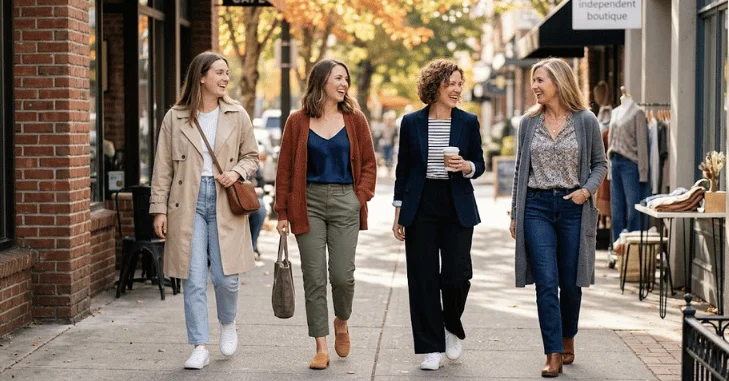
The easiest casual outfits don’t depend on a closet full of new clothes. A good everyday look combines comfort with clean proportions, practical shoes, and one detail that makes the combination feel intentional. With a few repeatable formulas, you can dress for errands, lunch, travel, relaxed workplaces, and weekends without starting from scratch each morning. Also worth reading: Cocktail Casual Attire.
Quick answer: Casual style looks polished when comfort is balanced with one clear point of structure. Start with a familiar base such as denim, trousers, a tee, or an easy dress, then add clean shoes and one purposeful layer or accessory. Fit, proportion, and clothing condition matter more than buying trend-heavy pieces.
| What you’re dressing for | Easy starting point | Finishing piece | Practical shoe |
|---|---|---|---|
| Errands | Straight jeans + T-shirt | Cardigan or overshirt | Sneakers |
| Casual office | Relaxed trousers + knit top | Blazer or belt | Loafers |
| Weekend lunch | Midi dress | Denim jacket | Flats |
| Travel | Soft pants + fitted tee | Button-down shirt | Sneakers |
| Warm weather | Shorts or skirt + tank | Lightweight shirt | Sandals |
| Cooler days | Denim + sweater | Trench or chore jacket | Loafers or boots |
Key Takeaways
Think in formulas rather than treating every morning as a new styling problem. Balance one relaxed piece with something cleaner or more defined, then choose footwear that fits what you’ll be doing. The strongest wardrobe is usually the one that lets you repeat the same pieces in several combinations without making each look feel identical.
What Makes Everyday Style Feel Current in 2026?
Current U.S. fashion coverage is leaning toward relaxed structure instead of complicated styling. Recent reporting has highlighted wide-leg and straight-leg denim, crisp shirts, tailored pants, loose button-downs, loafers, and flats as useful building blocks for 2026. Those pieces work because they mix comfort with a cleaner shape rather than requiring a head-to-toe trend.
That gives you plenty of room to work with clothes you already own. A fitted top can balance roomier denim, while a loose shirt works well with trousers that have a clean waistband and controlled drape. Small changes in proportion often make a familiar combination feel fresher without forcing you to replace your basics.
Use the Four-Part Formula Before You Get Dressed
You can build a useful casual look with four decisions: base, balance, shoe, and finish. The base gives you comfort, while the second piece changes the proportion so everything doesn’t feel equally loose or equally fitted. Your shoes should suit the day, and the finishing detail can be as simple as a belt, watch, small bag, or lightweight layer.
| Step | Question to ask | Example |
|---|---|---|
| Base | What do I want to wear most today? | Jeans |
| Balance | What shape complements it? | Fitted tee |
| Shoe | What can I comfortably do in it? | Low-profile sneaker |
| Finish | What makes it look intentional? | Belt or structured bag |
This method also makes shopping easier because each new piece has to earn several possible combinations. Before buying something, picture it with three items you already own and at least two different shoes. If you can’t build those combinations without buying more clothes, it may not be as versatile as it first appears.
12 Casual Outfits You Can Build From Everyday Pieces
- Straight-leg jeans + white tee + sneakers. Keep the denim clean, and choose a tee that either skims the body or falls in a controlled, relaxed shape. A belt, simple jewelry, or structured tote can finish the look without making it fussy.
- Baby tee + wide-leg denim + ballet flats. A shorter, more fitted top creates contrast against a wider jean and keeps the proportions clear. Styleliza’s baby tee fit guide explains how length, fabric, and waistband height change the balance.
- Button-down shirt + relaxed trousers + loafers. Leave the shirt slightly loose so the combination doesn’t read like traditional office wear. A small front tuck can add definition, and Styleliza’s French tuck guide shows how to keep the effect relaxed.
- Tank top + cardigan + straight denim. This works especially well in changing weather because you can take off the cardigan without changing the base. Try tonal neutrals for a quieter look or add one stronger color through the knit.
- Midi dress + denim jacket + sneakers. The dress removes most of the coordination work, while denim makes a softer style feel more relaxed. Choose a jacket that ends near the waist or upper hip if you want more visible shape.
- Matching knit top + relaxed pants. Similar colors immediately make simple separates feel connected, even when the fabrics are soft. Keep the shoes understated and introduce contrast through a bag, sunglasses, or jewelry.
- Tonal neutrals + one contrasting texture. Cream trousers, a beige knit, and brown footwear can feel more interesting when the fabrics differ slightly. For more ways to keep one-color dressing from looking flat, use Styleliza’s monochrome outfit formulas.
- Crewneck sweatshirt + tailored trousers + sneakers. The sweatshirt brings comfort while the trousers add the clean line that keeps the combination from resembling loungewear. A small shoulder bag or simple coat can add another structured element.
- Striped tee + denim midi skirt + loafers. Stripes add visual interest to the upper half without requiring complicated accessories. Choose a skirt you can walk comfortably in, then match the shoe weight to the fabric and hem.
- Flared jeans + fitted knit + pointed flats. A closer-fitting top keeps attention on the denim’s shape and avoids unnecessary volume. Styleliza’s flared jeans styling guide covers hem length, shoe choice, and fit in more detail.
- Cargo pants + crisp shirt + slim sneakers. The pants add the relaxed element, while a clean shirt keeps the look from feeling too sporty. Roll the sleeves or leave a few buttons open if you want the shirt to feel less formal.
- Black tee + cream jeans + lightweight jacket. High contrast makes two basic pieces look deliberate without adding prints or complicated layering. In cooler weather, a trench, chore jacket, or soft leather jacket adds coverage to the same formula.
Choose Shoes Based on the Day, Not a Fashion Rule
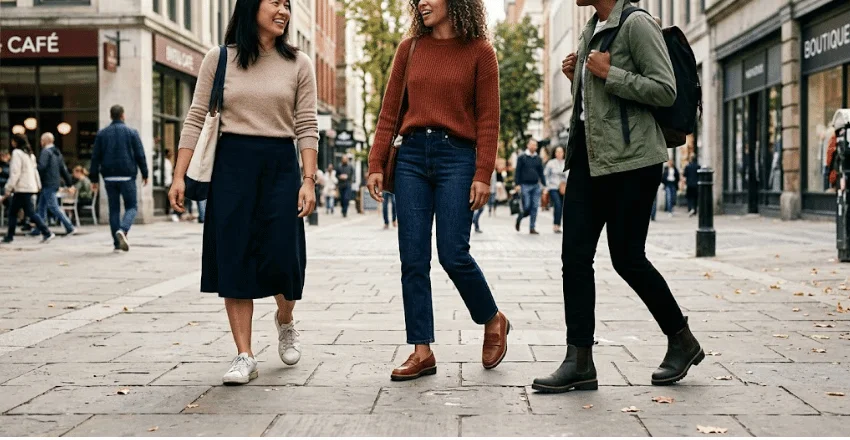
Shoes change the tone faster than almost any other part of a simple combination. Sneakers usually make denim, skirts, and dresses more relaxed, while loafers and ballet flats add polish without requiring a heel. Boots become useful in colder weather, especially when the hem of your pants or skirt works cleanly with the shaft.
If you want more visual weight at ground level, a moderate lug sole can work with straight denim, trousers, or skirts. A slimmer loafer usually looks quieter and moves more easily between weekends and relaxed workplaces. Styleliza’s chunky loafer styling guide offers more detail on choosing the right proportion and sole.
Make the Same Formula Work Through the Seasons
You don’t need a separate wardrobe formula for every month of the year. In spring and summer, choose lighter fabrics, open necklines, sandals, or short sleeves while keeping the same basic proportions. During fall and winter, add knitwear, socks, boots, heavier denim, and a coat without changing the underlying combination.
Transitional weather is often easier when you use removable layers instead of dressing for the coldest part of the day. A tee under an open shirt, a cardigan over a tank, or a jacket over a dress gives you options as temperatures change. Recent New York street-style coverage has also shown summer pieces mixed with crisp shirts, tailored pants, and lightweight fall layers.
Common Styling Problems and Quick Fixes
| Problem | Why it happens | Quick fix |
|---|---|---|
| Everything looks oversized | Too much volume at once | Define one area with a closer top, shorter layer, or visible waistband |
| The look feels unfinished | Nothing creates a focal point | Add a belt, bag, jewelry, or intentional layer |
| Pants bunch over shoes | Hem and shoe height conflict | Change the shoe or adjust the hem |
| Basics feel boring | Every piece has the same texture | Mix denim, knit, cotton, suede, or leather |
| A trend feels forced | It doesn’t connect to your wardrobe | Style one trend piece with familiar basics |
| The look is uncomfortable | Style was chosen before function | Start with the day’s walking, weather, and plans |
Looking put together usually depends more on these small corrections than on buying a statement piece. Clean hems, maintained shoes, comfortable clothing, and balanced proportions all affect how simple pieces read together. Before changing the entire look, identify the one detail that feels wrong and adjust that first.
Frequently Asked Questions
What makes a casual look feel polished?
Start with clothes that fit the way you intend and are in good condition. Then balance the proportions, such as pairing wider pants with a cleaner upper half or an oversized shirt with a defined waistband. One considered detail, including a belt, bag, shoe, or piece of jewelry, is often enough to finish the combination.
Can casual outfits work for the office?
Yes, when your workplace permits relaxed dressing, and the pieces still look neat and appropriate. Try tailored trousers with a knit, dark denim with a button-down, or a simple dress with loafers and a light jacket. Always follow your employer’s dress code because expectations vary by industry and office.
What shoes are easiest for everyday dressing?
Clean sneakers, loafers, ballet flats, simple sandals, and practical ankle boots cover most everyday situations. Choose based on walking distance, weather, and your hemline rather than assuming one shoe works with everything. Comfort matters because an otherwise attractive look becomes less useful if you avoid wearing it.
How can I look put together without buying new clothes?
Choose three pieces you wear often and build several combinations around each one. Change only the proportion, layer, shoe, or accessory so you can see which adjustments have the biggest effect. Taking quick mirror photos can also help you remember combinations that worked instead of rebuilding them later.
How many everyday basics do I need?
There isn’t one correct number because climate, laundry habits, work, and personal style all change what gets worn. Start by identifying the pieces you repeat already, then fill specific gaps rather than building a wardrobe from someone else’s checklist. A smaller set of clothes that mixes and matches easily can give you more usable choices than a crowded closet of unrelated purchases.
Build Three Go-To Formulas This Week
Pick three combinations from this guide that match what you already own, then wear each during a normal day. Pay attention to comfort, hem length, temperature, and which shoes make the proportions feel right. Once those three formulas work, changing colors, fabrics, and layers gives you many more options without turning getting dressed into a project.