

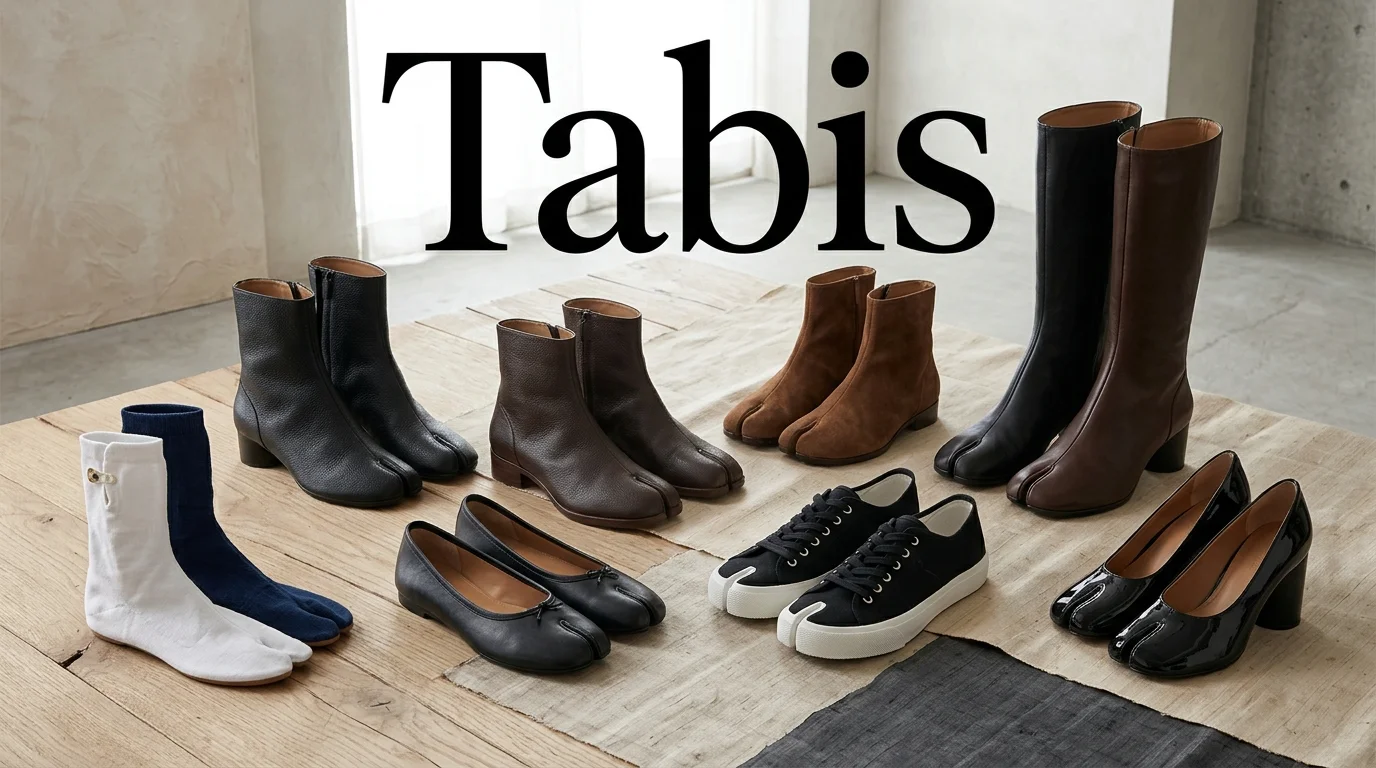
Tabis are split-toe shoes or socks that separate the big toe from the other toes. The shape comes from traditional Japanese footwear and later inspired high-fashion designs. Maison Margiela turned the silhouette into a fashion signature in the late 1980s. Today, you can find the split toe on boots, flats, loafers, heels, and sneakers.
| What to know | Quick answer |
| Traditional origin | Japanese split-toe socks worn with footwear such as geta and zōri |
| Fashion connection | Maison Margiela introduced its signature version in 1988 |
| Main feature | A separate section for the big toe |
| Common modern styles | Ballet flats, Mary Janes, boots, loafers, heels, and sneakers |
| 2026 status | Once niche, the shape is appearing across more mainstream footwear |
| Easiest first-pair approach | Pick a neutral color and a silhouette you already wear |
Key takeaways
- Traditional tabi socks and modern designer split-toe shoes aren’t the same thing.
- The easiest styling method is to pair an unusual toe shape with familiar clothing.
- Fit varies by model, so sizing and return policies matter more than the trend itself.
What Are Tabi Shoes, Exactly?
Traditional tabi are Japanese socks with the big toe separated from the remaining toes. That construction works with geta and zōri because their thong passes between the first two toes. Modern versions may use cotton and fasten at the back with small clasps.
Jikatabi are different. They use the same divided-toe shape but add a durable rubber sole, turning the design into practical footwear. Modern fashion shoes borrow the recognizable split while changing almost everything else, including materials, heels, straps, soles, and proportions.
That distinction matters if you’re shopping online. “Tabi” can describe traditional socks, work-oriented footwear, Maison Margiela designs, or fashion shoes inspired by the same shape.
How the Split Toe Became a Fashion Signature
Maison Margiela says its signature Tabi shoe first debuted in 1988. Martin Margiela transformed the traditional flat shape into a heeled boot for his first show. The soles were dipped in red paint so the models left divided footprints across the runway.
The design didn’t remain limited to one boot. The house has continued interpreting it through ballerinas, loafers, lace-ups, boots, and other forms. That consistency turned an unusual toe shape into one of the label’s most recognizable design codes.
The result is an interesting fashion contradiction. The silhouette looks unusual to many modern shoppers, yet its central construction has much older Japanese roots.
Why Split-Toe Shoes Feel Current in 2026
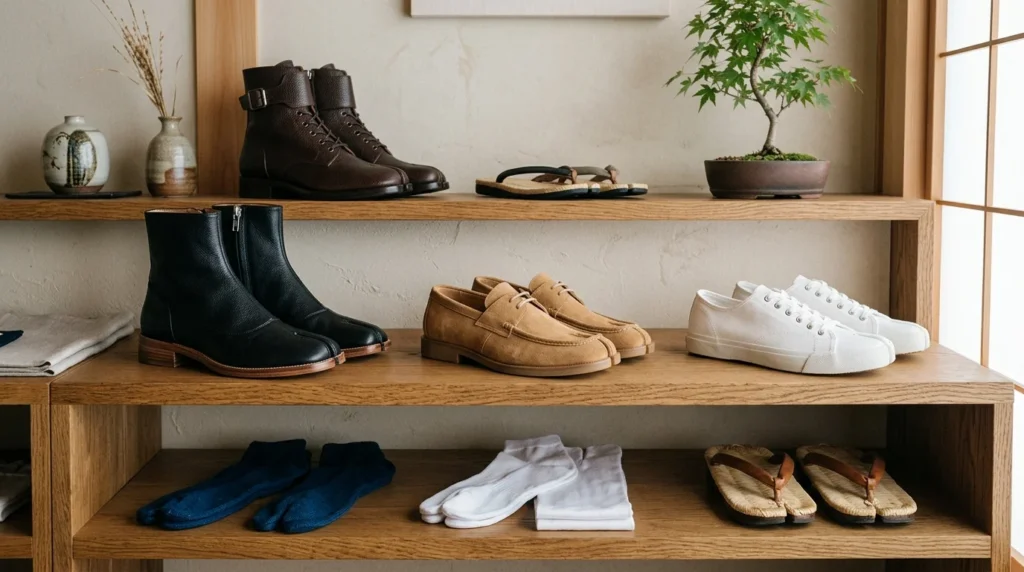
The shape is no longer limited to designer-fashion circles. Who What Wear reported in August 2026 that split-toe flats have become far more visible, with interpretations reaching retailers and brands beyond Maison Margiela. Ballet-flat versions are especially prominent.
For U.S. shoppers, Tabis now sit at the intersection of the ongoing ballet-flat trend and growing interest in unconventional footwear. Styleliza’s guide to unconventional footwear trends also places split-toe flats among 2026’s bolder shoe directions.
That doesn’t mean you need to buy the most dramatic pair. Styleliza’s look at current U.S. shoe trends shows that flats, Mary Janes, loafers, sneakers, and boots are all relevant now. A divided toe can work as a variation on a shape you already like.
How to Style Tabis Without Overcomplicating the Outfit
The toe already creates a strong focal point. You usually don’t need another unusual piece competing with it. British Vogue’s street-style examples pair the silhouette with familiar pieces such as denim, dresses, tailored trousers, and simple layers.
Try one of these straightforward outfit formulas:
- Straight jeans + knit + black split-toe flats. The denim keeps the outfit casual while the footwear adds the interesting detail.
- Black trousers + fitted top + matching dark shoes. A single-color base makes the silhouette look deliberate. Styleliza’s monochrome outfit formulas can help build the rest of the look.
- Relaxed suit + split-toe loafers. Keep the tailoring slightly loose, so the unusual footwear feels connected to the proportions.
- Midi skirt + Mary Jane pair. The familiar strap and skirt shape soften the visual effect of the divided toe.
- Loose denim + sportier split-toe sneakers. This works well if your wardrobe already leans casual rather than dressy.
Color is another useful control. Black, brown, cream, or burgundy lets you experiment with the shape without making color another focal point.
Fit, Comfort, and Socks: What Should You Check?
There isn’t a single reliable answer about whether this shape feels comfortable. Wearer experiences differ sharply by model. Some report that comfortable boots or sportier versions are more suitable, while others find certain flats and platforms less suitable for long walks.
Focus on the shoe rather than assuming the divided toe guarantees a particular feel. Check heel height, sole cushioning, upper material, width, and the location of the toe separation. Your big toe should sit naturally in its section without being pushed sideways. Don’t keep a pair that pinches just because you expect the shape to become comfortable later.
Split-toe socks are the simplest choice because they match the shoe’s construction. If you prefer regular socks, test a thin pair indoors first and check for bunching around the toe separation.
A First-Pair Guide for Beginners
Start with the type of shoe you already wear. A ballet-flat person will probably get more use from a divided flat than from a dramatic heeled boot.
| Style | Visual impact | Easy outfit | Main thing to check |
| Ballet flat | Medium-high | Jeans + knit | Heel security and sole comfort |
| Mary Jane | Medium-high | Skirt + simple top | Strap placement |
| Loafer | High | Trousers + sweater | Upper flexibility and width |
| Ankle boot | High | Denim + jacket | Heel height and break-in feel |
| Sporty style | Medium | Loose jeans + tee | Sole and intended use |
If the loafer shape interests you more than the split itself, compare it with Styleliza’s chunky loafer guide before choosing. The goal is repeat wear, not buying the most unusual option available.
Before ordering, build three outfits from clothes you own. Then check the brand’s size chart, material details, and return terms. Split-toe construction can make familiar sizing feel different.
Your next step: pick the silhouette closest to shoes you already wear, create three outfits around it, and judge fit before committing. You can also compare the pair against Styleliza’s 2026 U.S. footwear guide before you buy.
Frequently Asked Questions About Split-Toe Shoes
They can be, but comfort depends on the specific pair. Heel height, cushioning, width, material, and foot shape all affect how a shoe feels. Don’t assume the divided toe automatically makes a design more or less comfortable.
Traditional Japanese tabi separate the big toe so they can be worn with thong-style footwear such as geta and zōri. Contemporary fashion versions preserve that recognizable division as a design feature.
Split-toe socks usually provide the simplest fit because the fabric follows the shoe’s divided construction. A thin conventional sock may work with certain designs, but test it before wearing the shoes for several hours.
Yes. August 2026 fashion coverage is highlighting split-toe ballet flats and more accessible interpretations from multiple brands. The silhouette has moved beyond its earlier fashion-insider status, although it remains visually divisive.
Choose a neutral pair and wear it with clothing you already trust. Straight jeans, black trousers, simple knits, relaxed tailoring, and plain skirts give the unusual toe shape enough visual space.