

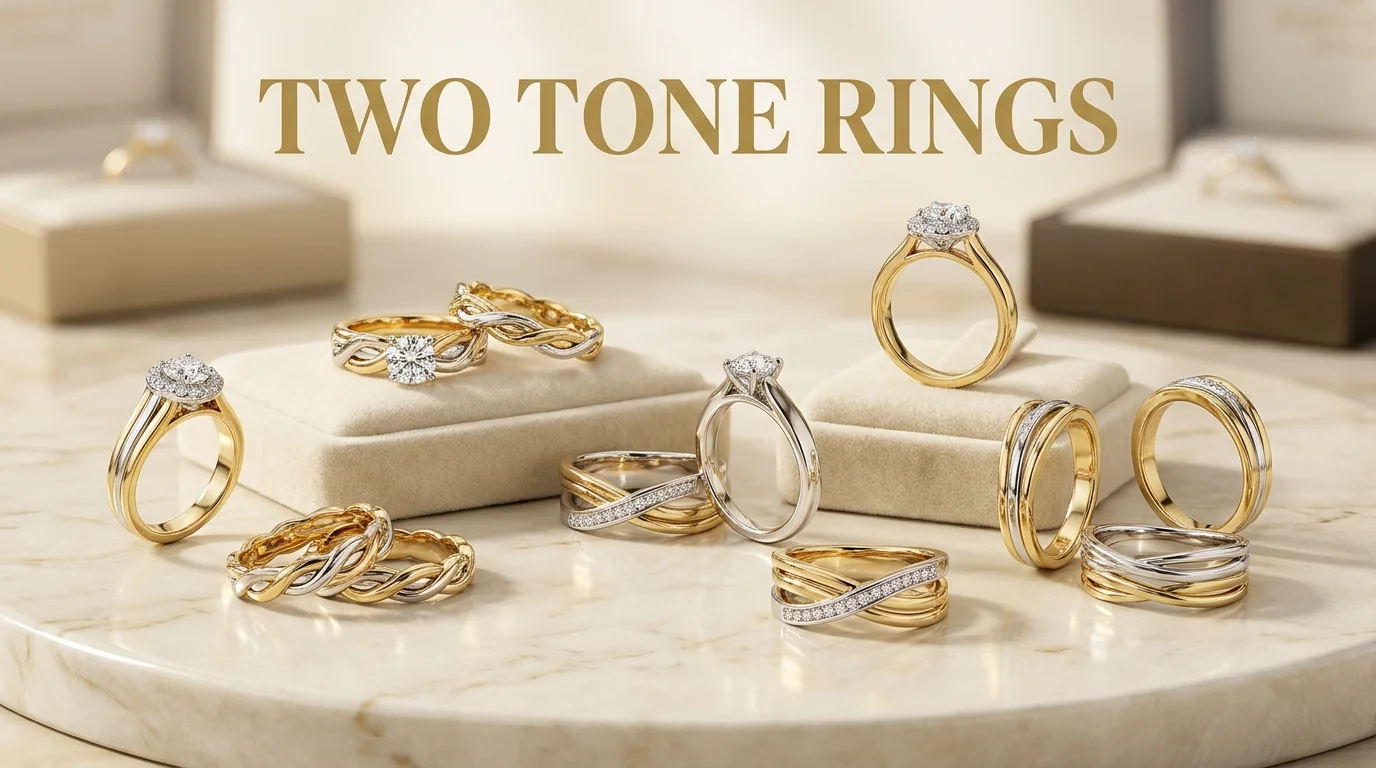
Two tone rings make mixing gold and silver-colored jewelry much easier. One design can connect warm and cool metals without making your accessories look mismatched. They also add contrast to simple outfits without requiring a larger jewelry collection.
Quick answer: Two-tone designs combine two metal colors within one ring, often yellow gold with white gold, silver, or platinum. They work especially well for people who already wear mixed metals. Choose a balanced design, repeat both tones elsewhere, and consider durability, plating, sizing, and daily wear before buying. More from us: double band engagement ring.
| Quick guide | What to know |
|---|---|
| Most familiar pairing | Yellow gold with a white metal |
| Softer alternative | Rose gold with white gold or silver |
| Best for easy styling | Designs with one dominant metal and one accent |
| Good everyday shapes | Dome, crossover, band, signet, and stackable styles |
| Useful buying check | Confirm whether metals are solid, plated, or bonded |
| Care consideration | White gold may need rhodium replating over time |
| Styling advantage | One piece can connect gold and silver jewelry |
Why Mixed-Metal Rings Work So Well
A mixed-metal design removes the old pressure to choose between gold and silver. It creates a bridge between different jewelry colors already in your wardrobe. That flexibility makes the style useful for both minimal and layered outfits.
The contrast can also make a simple shape feel more noticeable. A plain band gains depth when its edges, center, or details use another color. Sculptural designs can use that contrast to highlight curves, links, twists, or overlapping sections.
This approach also fits current styling habits that favor personal combinations over strict matching. You can wear warm earrings with a cool watch without replacing either piece. The ring gives both finishes a visual connection.
Two Tone Rings: Best Metal Combinations to Consider
The right pairing depends on your wardrobe, skin preferences, maintenance expectations, and budget. Some combinations create strong contrast, while others feel softer and more blended. The table below shows the main differences worth considering.
| Combination | Look | Main advantages | Possible drawbacks | Best for |
|---|---|---|---|---|
| Yellow gold + white gold | Classic, high contrast | Easy to match with gold and white metals | White gold may need replating | Everyday fine jewelry |
| Yellow gold + silver | Relaxed, modern | Strong contrast and broad styling range | Silver may tarnish | Casual mixed-metal wardrobes |
| Rose gold + white gold | Soft, polished | Warmer and less traditional | Color balance can vary by design | Romantic or understated looks |
| Gold + platinum | Refined, substantial | Durable white-metal contrast | Usually more expensive | Fine jewelry and bridal pieces |
| Two-tone plating | Fashion-forward | Lower entry price | Finish may wear with frequent use | Trend experimentation |
For most people, yellow gold with a white-colored metal is the easiest starting point. The contrast is clear enough to look intentional but familiar enough for daily styling. It also connects naturally with common watches, belt hardware, earrings, and necklaces.
Rose gold creates a gentler effect when strong yellow-and-white contrast feels sharp. Its pink warmth can soften silver, platinum, or white gold. Try the combination with muted neutrals, dusty colors, and softer fabrics.
How to Style Mixed Metals Without Looking Overdone
Start by choosing one metal as the dominant color in your jewelry. Let the second metal appear as an accent rather than splitting everything equally. This creates a deliberate, visible pattern.
For example, wear gold hoops and a gold necklace with a mixed-metal ring. Add a silver watch to repeat the cooler tone from your hand. The jewelry now has a clear connection instead of several unrelated finishes.
A two-metal piece also works well with simple tonal clothing. Black, cream, gray, denim, navy, and brown give metallic contrast room to show. Styleliza’s monochrome outfits guide offers useful ideas for creating that quieter clothing background.
Use One Piece as the Bridge
The easiest formula is one dominant tone, one secondary tone, and one connecting piece. Your connecting piece contains both colors and explains the mix visually. You can then repeat either metal elsewhere without making the result feel random.
This method works particularly well when your everyday accessories already disagree. A gold handbag clasp may sit beside a silver watch or cool-toned belt buckle. Rather than matching everything, use the mixed-metal piece to connect those details. You might also like our piece on the best black handbags.
Keep scale controlled when several accessories are visible at once. A large sculptural band needs less competition from bracelets or stacked pieces. Slimmer designs leave more space for layered jewelry.
How to Build a Balanced Ring Stack
Choose one focal design before adding supporting bands. The focal piece can be wider, textured, gemstone-set, or visibly mixed in color. Keep surrounding bands simpler so the hand doesn’t look visually crowded.
You do not need every finger to carry jewelry. Leaving space between groups often makes each piece easier to notice. It also reduces uncomfortable rubbing between wider or heavily textured bands.
When stacking metals, repeat at least one color more than once. A mixed piece beside one yellow band and one white band creates an easy three-piece formula. You can adjust widths while keeping the color story consistent.
Match the Metals With Your Color Palette
Your clothing colors can help decide which metal should dominate. Warm wardrobes built around camel, cream, olive, rust, and chocolate often pair easily with visible gold. Styleliza’s Soft Autumn color palette guide explains how softer mixed metals can support warm-muted outfits.
Cool wardrobes can reverse that balance. Silver, white gold, or platinum can lead while yellow or rose accents add controlled warmth. The Summer color season guide shows how cooler, softer colors can work with mixed-metal accessories.
Higher-contrast wardrobes offer even more freedom. Black, optic white, navy, jewel tones, and crisp tailoring can support stronger metallic contrast. Styleliza’s Cool Winter color palette guide offers more examples of styling cool metals with clear colors.
These palette ideas are guides rather than rules. Your favorite jewelry can work even when its metal does not match a seasonal color category. Outfit balance and personal preference matter more than rigid matching.
What to Check Before Buying
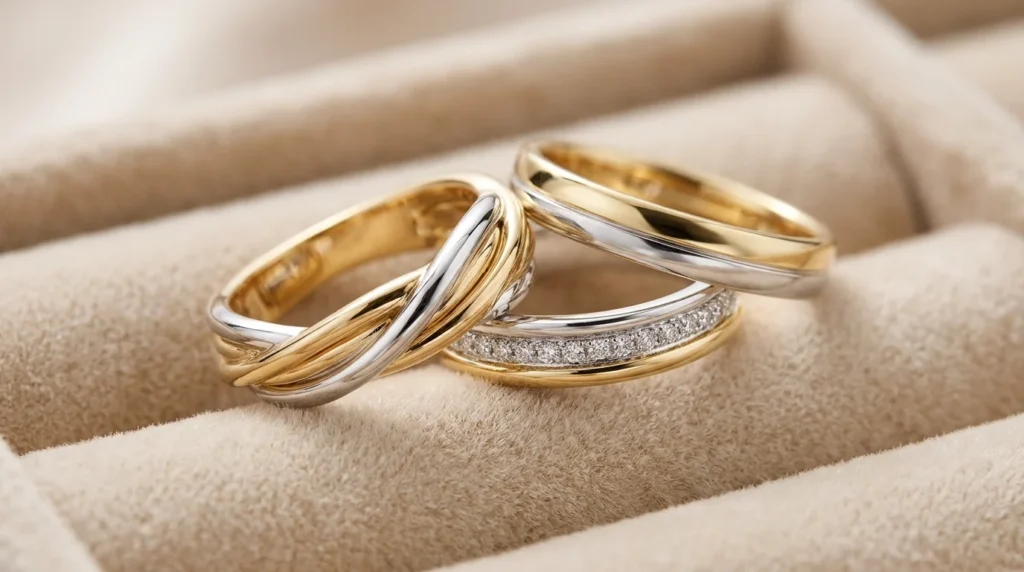
Look beyond the two colors before choosing a piece. Two designs can look similar online but use completely different materials and construction. Product descriptions should clearly explain the metal, plating, stones, and available sizing.
Check the following details before purchasing.
- Whether each visible color is solid metal, plating, vermeil, or another finish.
- The karat of any gold used in the design.
- Whether white gold has rhodium plating.
- The base metal underneath plated areas.
- Available sizes and the seller’s resizing policy.
- Care instructions for gemstones or delicate finishes.
- Return terms if the color looks different in person.
Solid precious metals generally suit long-term wear better than thin decorative finishes. Plated fashion pieces can still be useful when you want to test the style first. Your choice should reflect how often you expect to wear the piece.
Comfort matters as much as appearance for everyday jewelry. Check band width, interior shape, raised details, and neighboring fingers. A beautiful design will spend more time in your jewelry box if it pinches during normal movement.
Are Two-Metal Designs Still in Style in 2026?
Mixed warm and cool metals remain visible across current jewelry collections and styling guides. The broader direction favors individual combinations rather than strict matching across every accessory. That makes mixed-metal jewelry especially practical rather than purely trend-driven.
The most current versions often use clear contrast and controlled shapes. Crossover bands, domes, links, signets, sculptural forms, and stacked effects all suit the look. You do not need an oversized statement design to make the color difference noticeable.
The strongest choice is one that also works after a specific trend fades. Look for a shape you already wear and add contrast through the metal colors. Familiar proportions usually have better staying power than highly novelty-driven designs.
How to Care for a Mixed-Metal Ring
Care depends on the materials rather than the number of colors. Gold, silver, platinum, plating, and gemstones can each require different handling. Follow the maker’s instructions when the piece contains several materials.
For many plain gold pieces, gentle cleaning with warm water and mild soap is appropriate. Use a soft brush only when the setting and stones can safely handle it. Avoid harsh household chemicals, especially chlorine, around fine jewelry.
White gold deserves an extra maintenance check because many pieces use rhodium plating. That bright surface can wear gradually with regular use. A jeweler can assess whether professional cleaning, polishing, or replating is appropriate.
Plated pieces need gentler treatment because aggressive polishing may remove the decorative finish. Keep them away from harsh cleaners and prolonged moisture whenever the maker recommends it. Store pieces separately to reduce scratching and unnecessary friction.
Our Verdict: Who Should Choose This Style?
Choose a mixed-metal design if your jewelry box already contains both warm and cool metals. It is one of the simplest ways to make those pieces work together. You also gain more freedom when choosing watches, earrings, bracelets, and bag hardware.
People building a smaller jewelry wardrobe may find the style especially useful. One adaptable piece can support several accessory combinations without requiring matching sets. That makes versatility a stronger reason to buy than trend status alone.
If you prefer strict matching, a single-metal design may still feel cleaner. You should not choose contrast simply because it appears current. The most useful jewelry fits your existing clothes, accessories, comfort needs, and maintenance habits.
Frequently Asked Questions
What are two tone rings?
Two tone rings use two visible metal colors within one design. Common examples combine yellow gold with white gold, silver, or platinum. Some pieces use separate metals, while others create the second color through plating or another surface finish.
Can you wear gold and silver rings together?
Yes, gold and silver can be worn together in the same jewelry look. Repeating each tone makes the combination appear more intentional. A piece containing both colors can connect the rest of the stack.
Do mixed-metal designs go with every outfit?
They work with a wide range of outfits because they contain more than one metallic color. Neutral clothing makes the contrast especially easy to manage. Strong colors can also work when the jewelry scale remains balanced.
Does white gold stay bright forever?
Many white-gold pieces are rhodium plated for a brighter white finish. That surface can gradually wear and may need professional replating. Wear patterns depend on the piece, lifestyle, and original construction.
Are mixed-metal rings harder to resize?
Resizing depends on construction, stones, pattern placement, and the metals involved. A simple band may be easier to alter than an intricate multi-part design. Ask a qualified jeweler before purchasing when future resizing matters.
How many metals should you mix at once?
Two colors provide the easiest starting point for most outfits. You can introduce a third tone when the overall styling has enough repetition and visual space. Keeping one metal dominant usually produces the clearest result.
Make Mixed Metals Feel Like Your Own Style
The best mixed-metal look starts with jewelry you already enjoy wearing. Choose one connecting design, repeat its colors, and adjust the balance until the combination feels natural. You do not need to replace an entire collection to make gold and silver work together.
Focus on material quality, comfort, and realistic care before chasing a particular finish. Those details determine whether a piece becomes part of your regular rotation. A thoughtful choice should work across outfits, seasons, and changing accessory trends.