
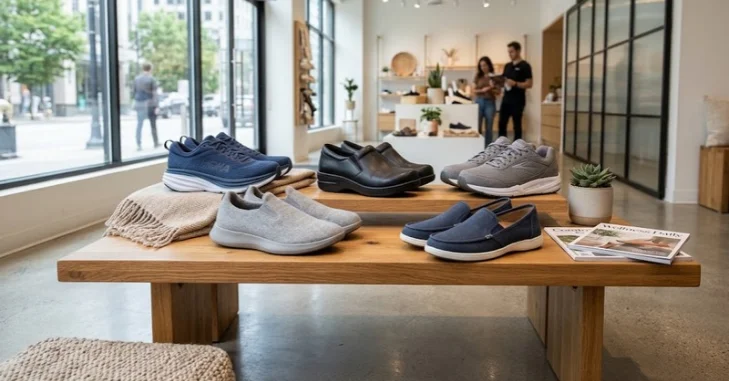
Finding comfy shoes for standing all day takes more than choosing the softest pair available. Good footwear should cushion hard floors, support your foot, and remain stable during long shifts. The right design should also fit your wardrobe and workplace.
Quick answer: For long periods of standing, prioritize supportive cushioning, a stable heel, enough toe room, and a secure fit. Cushioned sneakers work well for demanding shifts. Structured clogs, flats, and low heels can offer dressier alternatives when your workplace requires them.
| What to check | A practical starting point | Why it matters |
|---|---|---|
| Cushioning | Moderate or generous cushioning | Helps soften repeated pressure from hard floors |
| Stability | Firm heel and controlled sole | Helps your foot feel supported during long periods |
| Toe room | Enough room to move your toes | Accommodates normal foot expansion during the day |
| Upper | Breathable and secure | Reduces rubbing while keeping the foot controlled |
| Outsole | Grippy for your work surface | Adds confidence on smooth or busy floors |
| Width | Match your actual foot shape | Prevents unnecessary side pressure |
| Style | Suitable for your dress code | Makes the pair useful beyond one situation |
7 Comfortable Options Worth Considering Comfy Shoes for Standing
Comfy Shoes for Standing U.S. footwear guides consistently favor cushioning, arch support, stability, and sufficient toe space. Podiatrists quoted by Yahoo Health highlight those same qualities for long periods on your feet. Shape also emphasizes responsive cushioning and stability for extended standing.
The best choice still depends on your job, flooring, foot shape, and clothing needs. A hospital worker may need different traction than someone working behind a retail counter. An office employee may prioritize a cleaner silhouette over maximum athletic cushioning.
| Option | Best for | Cushioning | Style | Main consideration |
|---|---|---|---|---|
| Hoka Bondi 9 | Hard floors and long shifts | High | Sporty | Bulky shape |
| New Balance 880v15 | Standing plus walking | Moderate-high | Classic sneaker | Neutral support |
| Brooks Adrenaline GTS 24 | People wanting more structure | Moderate | Athletic | Firmer feel |
| ASICS Gel-Nimbus 27 | Soft cushioning | High | Sporty | May feel too soft for some |
| Dansko Kane Clog | Service and work settings | Moderate | Practical | Clog fit is distinctive |
| Dressy supportive flat | Office and retail | Moderate | Polished | Fit varies by shape |
| Low block heel or loafer | Professional dress codes | Moderate | Dressy | Lower heights work better |
1. Hoka Bondi 9: Best for Maximum Cushioning
The Hoka Bondi 9 is a strong option for people spending hours on firm indoor surfaces. Good Housekeeping currently names it a top choice for standing all day. The publication also highlights its substantial cushioning and wide-width availability.
Its thicker sole creates a noticeably cushioned feel beneath the foot. That can suit retail workers, teachers, and others who remain upright for long periods. The oversized sole also creates a modern athletic look.
Pros.
- Generous cushioning
- Wide and extra-wide options
- Breathable upper
- Works for standing and walking
Cons.
- Chunkier than traditional sneakers
- May look too athletic for formal workplaces
2. New Balance Fresh Foam X 880v15: Best Balanced Option
The New Balance Fresh Foam X 880v15 offers a middle ground between softness and structure. Forbes Vetted describes its cushioning as comfortable without feeling excessively soft. It also comes in several width options for different foot shapes.
This balance makes it useful when your day includes both standing and regular walking. The appearance is also more understated than many maximal-cushion designs. Neutral colorways can work easily with casual work clothes.
Pros.
- Balanced cushioning
- Several width choices
- Breathable mesh construction
- Easy everyday styling
Cons.
- Neutral construction may not suit every support need
- Still looks like an athletic sneaker
3. Brooks Adrenaline GTS 24: Best for a More Structured Feel
The Brooks Adrenaline GTS 24 appears among Shape’s current recommendations for people standing all day. It makes sense for shoppers who prefer a more controlled feeling beneath the foot.
Some people dislike the sinking sensation created by extremely plush foam. A structured sneaker can feel more predictable during long workdays. It can also transition easily from work to errands or walking.
Pros.
- Supportive construction
- Secure lace-up fit
- Suitable for active workdays
- Easy to style casually
Cons.
- Firmer than maximum-cushion alternatives
- Athletic appearance limits formal use
4. ASICS Gel-Nimbus 27: Best for Soft Cushioning
The ASICS Gel-Nimbus 27 combines a roomy shape with substantial cushioning. Shape highlights its shock absorption, arch support, and spacious toe area. The publication also notes that some wearers may find the cushioning excessive.
That distinction matters because softness and support are not the same thing. Your foot should feel comfortable without moving unpredictably inside the shoe. Try standing for several minutes before deciding whether the cushioning feels controlled.
Pros.
- Soft underfoot feel
- Spacious toe area
- Good shock absorption
- Useful for standing and walking
Cons.
- May feel too soft for some people
- Sport-focused styling
5. Dansko Kane Clog: Best for Practical Work Settings
Clogs remain popular in jobs where easy wear and practical construction matter. Shape currently includes the Dansko Kane among its work-focused standing options. Its closed shape can also fit settings where open footwear is unsuitable.
A clog feels different from a lace-up sneaker, so fit deserves extra attention. Your foot should remain secure without painful pressure across the upper. Check your employer’s traction and footwear requirements before buying.
Pros.
- Easy to put on
- Practical work-friendly shape
- Closed toe
- Easy to pair with uniforms
Cons.
- Clog styling is not for everyone
- Fit feels different from sneakers
6. Supportive Flats: Best for Dressier Workplaces
Sneakers are not always appropriate for offices, stores, restaurants, or customer-facing roles. A supportive flat can provide a cleaner alternative without adding significant heel height. Yahoo Health currently includes a dress flat among its standing-focused recommendations.
Look for a secure heel, cushioned footbed, and enough room across the front. Avoid choosing a narrow shape because it looks more elegant. Style loses its appeal quickly when a shoe creates pressure after several hours.
For more dress-shoe fit advice, Styleliza’s comfortable heels guide explains cushioning, toe space, and stable construction. Those principles remain useful even when choosing a flat. The same guide also explains why softness cannot correct a poor fit.
Pros.
- Suitable for polished outfits
- Easy with trousers and dresses
- Less athletic appearance
- Available in many silhouettes
Cons.
- Some fashionable flats lack real support
- Narrow toe shapes can become uncomfortable
7. Low Block Heels and Loafers: Best for Professional Style
A low block heel or structured loafer can suit offices where sneakers feel too casual. The broader base usually feels steadier than a narrow high heel. Lower heights also place fewer styling restrictions on everyday outfits.
Styleliza’s work heels guide recommends stable shapes, sensible height, cushioning, and sufficient toe room. Its chunky loafers guide also explains how secure fit and sole construction affect wearability. Both guides can help when comfort must coexist with a professional dress code.
Pros.
- More polished than running shoes
- Works with trousers, skirts, and dresses
- Broad heel shapes feel steadier
- Loafers transition easily beyond work
Cons.
- Less cushioning than many sneakers
- Firm uppers may require break-in time
How to Choose Comfy Shoes for Standing
Start by considering how much of your day involves standing versus walking. Standing mostly in one location places different demands on footwear than covering several miles. Your work surface also affects how much cushioning and traction you may want.
Next, check the fit later in the day when possible. Feet can feel fuller after hours of activity, so a morning-only fitting may mislead you. Your toes should move without the heel sliding excessively.
Then test stability instead of judging softness alone. Podiatrists quoted in current footwear coverage repeatedly emphasize cushioning, arch support, stability, and toe space together. A shoe that feels plush but unstable may become tiring over a long shift.
Finally, match the pair to clothes you already wear. A supportive shoe becomes more useful when it works with several existing outfits. Styleliza’s casual outfit guide offers simple formulas using sneakers and loafers.
Match Your Shoes to Your Workday
Healthcare and hospitality workers should pay close attention to traction and workplace rules. Long hours also make a secure fit and easy-to-clean materials useful. A comfortable sneaker is not automatically suitable for every workplace.
Teachers and retail workers often need more flexibility. They may stand, walk, climb stairs, and move between indoor surfaces throughout one shift. A supportive sneaker or structured loafer can work well for that combination.
Office workers usually have more freedom to prioritize appearance. Flats, loafers, and low block heels can fit professional clothing more naturally. Keep heel height moderate when extended standing is part of your routine.
Our Verdict
For maximum cushioning on hard floors, the Hoka Bondi 9 is the strongest starting point among current mainstream options. The New Balance 880v15 offers a more balanced alternative for standing and walking. A structured loafer or supportive flat works better when athletic footwear conflicts with your dress code.
Don’t choose by brand name alone. Your foot width, floor surface, daily movement, and workplace rules should guide the final decision. Try the pair with the socks or inserts you normally wear.
Choose for Your Real Day, Not the Product Photo
The right pair should support the work you actually do while fitting your personal style. Start with cushioning, stability, toe room, and secure fit before comparing colors or trends. Then choose the silhouette that works best with your everyday wardrobe.
For athletic comfort, start with a well-fitted cushioned sneaker and compare several firmness levels. For professional settings, explore structured flats, loafers, or low block heels instead. A useful shoe should make your normal routine easier without forcing you to dress around it.
Frequently Asked Questions
What are the best comfy shoes for standing all day?
Look for cushioning, stability, adequate toe room, and a secure fit. Cushioned sneakers often suit long shifts on hard floors. Supportive flats or loafers can work when you need a dressier appearance.
Is more cushioning always better for standing?
No, because excessive softness can feel unstable for some wearers. Support should feel controlled rather than spongy or unpredictable. Your preferred firmness can also depend on your foot and work surface.
Are running shoes good for standing all day?
Many running shoes work well because they combine cushioning, breathable uppers, and supportive construction. Current standing-shoe lists frequently include running models from Hoka, Brooks, ASICS, and New Balance.
Should shoes feel tight when I first buy them?
They should feel secure, but painful pressure is not a useful break-in strategy. Check the toe area, heel movement, and width before keeping a pair. Persistent rubbing or pinching usually signals the wrong fit.
Can loafers be comfortable enough for long standing days?
Yes, if the pair has adequate cushioning, a secure upper, and enough toe room. A moderate sole can also feel easier than a rigid dress shoe. Test the shoes while standing before wearing them through a full workday.
When should I replace work shoes?
Replace footwear when cushioning feels compressed, tread becomes worn, or the upper stops holding your foot securely. Wear patterns depend on your job, walking volume, body weight, and shoe construction. Pay attention to declining comfort instead of following one fixed calendar.