
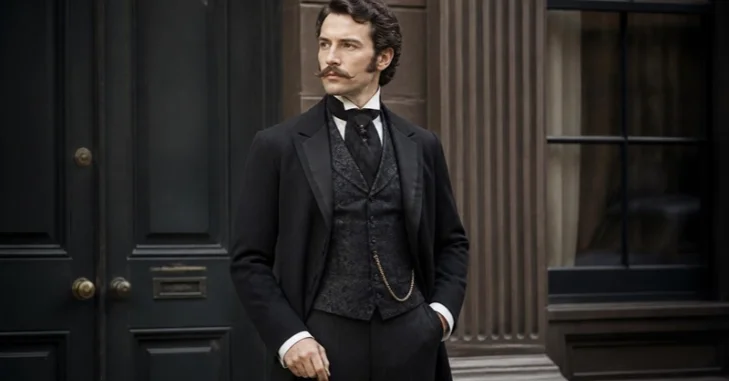
A Victorian suit is more than a long coat paired with an ornate vest. Authentic versions changed considerably between 1837 and 1901. Understanding those changes helps you choose clothes that look intentional rather than theatrical. More from us: Types of Coats.
Direct answer: Victorian menswear usually combines a structured coat, waistcoat, high-rise trousers, formal shirt, and period-appropriate neckwear. Frock coats dominated much of formal daytime dressing, while morning coats gained importance later. Modern versions can preserve those proportions while using lighter fabrics, simpler accessories, and comfortable contemporary tailoring.
| What to know | Practical answer |
|---|---|
| Historical period | Victorian Britain, 1837–1901 |
| Signature coat | Frock coat |
| Later daytime option | Morning coat |
| Core layers | Coat, waistcoat, shirt, trousers |
| Common colors | Black, charcoal, brown, navy, muted checks |
| Useful accessories | Cravat, tie, pocket watch, gloves, hat |
| Modern approach | Keep period proportions while simplifying accessories |
| Best uses today | Weddings, formal events, reenactments, theater, gothic style |
Key Takeaways
- Victorian menswear changed across more than six decades.
- Frock coats created one of the era’s most recognizable formal silhouettes.
- Waistcoats were important parts of respectable middle- and upper-class dressing.
- Morning coats became increasingly important for daytime formal wear later in the century.
- Modern outfits look stronger when they borrow proportions instead of copying every accessory.
- Fit, fabric, and occasion should guide your purchase more than decorative details.
What Makes Victorian Menswear Look Distinctive?
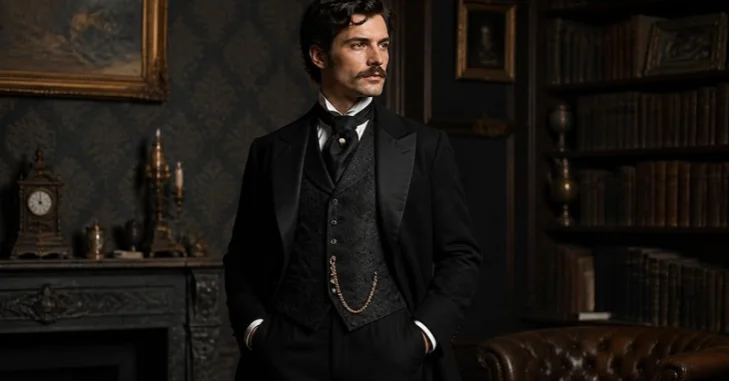
Victorian Suit tailoring usually emphasized a defined torso and controlled proportions. Coats often extended farther down the body than modern suit jackets. High-rise trousers and visible waistcoats also changed the wearer’s proportions.
The frock coat became especially important during the nineteenth century. The Metropolitan Museum of Art holds an American example dated around 1840. Its collection notes describe the style as an important symbol of nineteenth-century masculine dress.
Color also became more restrained as the century progressed. The Victoria and Albert Museum notes the growing importance of dark wool cloth in nineteenth-century menswear. Dark frock coats became common markers of respectable urban dressing.
Modern shoppers sometimes associate the period mainly with black gothic clothing. Historical wardrobes were broader than that stereotype suggests. Brown, gray, patterned waistcoats, contrasting trousers, and textured wool all appeared across the century.
The Main Victorian Suit Styles to Know
The era did not have one fixed formal uniform. Different coats served different times, settings, and degrees of formality. Knowing the basic categories makes modern shopping much easier.
| Style | Main feature | Historical role | Modern use |
|---|---|---|---|
| Frock coat | Long, full skirt and fitted body | Formal daytime and professional dress | Weddings, reenactment, statement tailoring |
| Morning coat | Cutaway front with longer back | Daytime formal wear | Weddings and ceremonial events |
| Tailcoat | Short front with long rear tails | Formal evening wear | White-tie or historical events |
| Sack or lounge coat | Shorter, less structured coat | Less formal daily clothing | Wearable period-inspired outfits |
| Three-piece suit | Jacket, waistcoat, trousers | Growing everyday importance | Easiest modern interpretation |
Frock Coat
The frock coat creates the silhouette most people immediately associate with Victorian gentlemen. It generally reaches toward the knee and has a defined waist. Its length gives the outfit more presence than a modern business suit.
Historical examples show that wool was an important material for these coats. Darker examples became especially connected with professional and respectable dress. A well-fitted modern reproduction should create shape without restricting normal movement.
Choose this style when historical character matters most. It works well for period weddings, theater, formal photography, and reenactment. Remove excessive accessories if you want the coat to feel more contemporary.
Morning Coat
A morning coat has a front that curves backward into longer tails. The shape developed from riding clothes before gaining broader formal use. The Met records an 1894 morning suit showing its established late-century form.
This option feels especially appropriate for daytime ceremonial dressing. Modern morning dress still survives in certain formal wedding and social traditions. That continuity makes it easier to wear without appearing like a costume.
Pair it with restrained trousers and a fitted waistcoat. Avoid combining several novelty accessories around the same coat. The distinctive cut already supplies enough historical character.
Sack and Lounge Suits
Victorian men did not spend every day wearing knee-length formal coats. Shorter sack jackets developed as more relaxed alternatives during the nineteenth century. FamilySearch notes their growing popularity as informal menswear during the 1840s.
These shorter jackets became important ancestors of modern tailoring. They provide a useful direction for anyone who likes historical style without full reenactment clothing. A waistcoat and higher trouser rise can create the reference without requiring a dramatic coat.
That approach also connects naturally with contemporary tailoring. Styleliza’s Tom Ford suit guide shows how shoulder structure, waist suppression, and lapel proportions still influence modern formalwear. The styling language changes, but proportion remains central.
How to Choose a Victorian Suit Today
Start by deciding whether you want historical accuracy or modern wearability. Reenactment clothing demands more attention to period construction and accessories. Weddings and fashion outfits allow more flexibility.
Next, choose the coat before worrying about smaller details. A frock coat creates strong historical impact, while a sack-style jacket feels subtler. Your coat determines the proportions that every other piece must support.
Fabric should match the weather and event. Heavy wool can feel appropriate but uncomfortable during warm American summers. Lighter wool blends or breathable natural fibers can preserve structure with less heat.
Fit deserves more attention than decoration. The shoulders should sit cleanly, while the waist should feel shaped without pulling. Trousers should rise high enough to meet the waistcoat without exposing shirt fabric.
Use this order when shopping:
- Decide whether historical accuracy or everyday wearability matters more.
- Choose a coat style that matches the event.
- Pick a fabric suitable for your local climate.
- Check shoulder, chest, waist, and trouser proportions.
- Add a waistcoat that connects the upper and lower outfit.
- Select restrained neckwear and footwear.
- Add only one or two historical accessories.
Building a Modern Victorian-Inspired Outfit
You do not need every period detail to communicate the style. Start with a structured jacket, high-rise trousers, and waistcoat. Those three elements establish the strongest proportions.
A white shirt provides an easy foundation for formal outfits. Add an Ascot-inspired tie, cravat, or simple dark necktie for historical character. Keep the neckwear controlled if the waistcoat already carries a pattern.
Footwear should support the same level of formality. Sleek leather boots work better than bulky contemporary sneakers. Styleliza’s Chelsea boots guide is especially relevant because elastic-sided boots trace their history to Victorian England.
Color can keep the outfit grounded. Charcoal, brown, black, navy, cream, and muted burgundy work easily together. Patterned waistcoats can add personality without turning the entire outfit into costume clothing.
The same restraint works with other historical references. Styleliza’s Beatnik style guide shows another example of adapting recognizable period signals without copying an entire historical uniform. One clear reference usually looks stronger than five competing ones.
Costume Clothing Versus Wearable Formalwear
Costume versions often prioritize visual recognition over construction. They may use shiny synthetic cloth, exaggerated lapels, decorative buttons, and theatrical accessories. That approach can work perfectly for Halloween, theater, or themed photography.
Formalwear needs different priorities. Fabric should drape cleanly, seams should sit correctly, and the coat must survive several hours of movement. The waistcoat and trousers should also look convincing without the coat.
Check product photographs closely before ordering online. Look at shoulder lines, button placement, trouser rise, and coat length. Detailed measurements are more useful than a simple small-to-extra-large sizing label.
Return policies also matter for U.S. buyers. Historical reproductions often use unfamiliar proportions compared with mainstream American suits. Leave enough time for alterations before weddings or ticketed events.
Accessories That Improve the Look
Accessories should support the tailoring rather than compete with it. A pocket watch, gloves, hat, or walking stick can create period character. Wearing all of them together can quickly make a formal outfit feel theatrical.
A cravat or Ascot-style tie is usually the easiest addition. It changes the neckline while leaving the rest of the outfit relatively familiar. A simple pocket watch can provide another subtle historical detail.
Top hats work best for highly formal interpretations. Bowlers and other period-inspired hats can suit less formal outfits. Skip headwear completely when you want the clothing to feel more modern.
How to Adapt the Style for U.S. Weather
Climate matters because traditional fabrics can become uncomfortable quickly. A heavy black wool coat may work in a Northeast winter. The same garment can feel impractical during a summer event in Texas or Florida.
Warm-weather outfits benefit from lighter wool, cotton blends, and breathable shirts. Choose fewer layers when historical precision is not required. A waistcoat can provide the period reference without a heavy coat throughout the event.
Cold-weather dressing gives you more freedom. Wool frock coats, boots, gloves, and heavier trousers become practical rather than decorative. Dark colors also integrate easily with modern winter wardrobes.
Make the Historical Reference Feel Intentional
The strongest outfits start with proportion rather than decoration. Choose the correct coat, establish a higher waist, and let the waistcoat connect both halves. Then add accessories only where they improve the complete silhouette.
Historical accuracy can be rewarding, but it is not required for every occasion. A modern interpretation can borrow Victorian structure while remaining comfortable and easy to wear. Choose pieces you can move in, tailor them properly, and let the clothing carry the period reference.
Frequently Asked Questions
What is a Victorian suit?
A Victorian suit is menswear inspired by clothing worn during Queen Victoria’s reign from 1837 to 1901. Common components include a coat, waistcoat, shirt, high-rise trousers, and formal neckwear. Exact details depend on the decade and occasion.
What coat should I choose for the most recognizable look?
Choose a frock coat if you want strong historical character. Its length and fitted waist create a recognizable nineteenth-century silhouette. A morning coat works better for later-period daytime formality.
Were Victorian men’s suits always black?
No, although dark formal clothing became increasingly important. Men also wore brown, gray, checks, contrasting trousers, and decorative waistcoats. Color depended on period, class, setting, and formality.
Can you wear Victorian-inspired tailoring to a wedding?
Yes, especially when the event supports formal or historical styling. A restrained frock or morning coat can look elegant instead of theatrical. Keep fabrics and accessories polished if the wedding is not explicitly themed.
What shoes work with Victorian-inspired menswear?
Leather lace-up boots and sleek ankle boots are practical choices. Choose a refined sole for formal events and avoid overly sporty shapes. Dark brown and black are the easiest colors to coordinate.