
White tie is the highest level of traditional Western evening dress. It is more formal than black tie and follows much stricter clothing rules. In the United States, you may encounter it at state dinners, formal balls, diplomatic events, and rare ceremonial weddings.
If an invitation specifies this dress code, a standard tuxedo or cocktail dress usually isn’t formal enough. Traditional masculine attire requires an evening tailcoat and specific white accessories. Traditional feminine attire centers on a floor-length formal evening gown.
White Tie at a Glance
| Detail | Traditional Masculine Attire | Traditional Feminine Attire |
| Main garment | Black evening tailcoat | Floor-length evening gown |
| Shirt/top | White wing-collar formal shirt | Formal gown bodice |
| Neckwear | White bow tie | Not applicable |
| Waist | White piqué waistcoat | Depends on gown |
| Shoes | Black patent formal shoes | Refined evening shoes |
| Gloves | White or gray, often optional today | Long evening gloves, often optional |
| Accessories | Studs, cuff links, pocket square | Fine jewelry, clutch, wrap |
| Formality | Highest evening level | Highest evening level |
Quick answer: White tie means full formal evening dress. Traditional menswear includes a black tailcoat, matching formal trousers, a stiff white shirt, a white waistcoat, and a white bow tie. Traditional womenswear calls for a floor-length evening gown. It ranks above black tie and leaves far less room for casual substitutions.
What Does White Tie Mean?
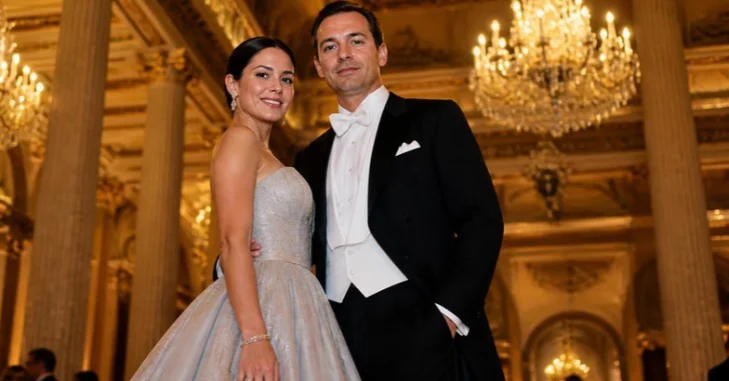
The white tie name can be confusing because it doesn’t mean guests should wear white clothing. Instead, the term refers partly to the white bow tie worn with traditional men’s evening dress. The rest of that outfit is primarily black and white.
This dress code developed as a highly formal standard for evening occasions. Today, Americans encounter it much less frequently than cocktail or black-tie attire. Its rarity is one reason an invitation bearing those words deserves careful attention.
The easiest approach is to treat the invitation literally. Don’t downgrade the requested formality because a tuxedo or cocktail dress feels dressy enough. When hosts specify full evening dress, they are setting a precise level for the event.
What Men Should Wear
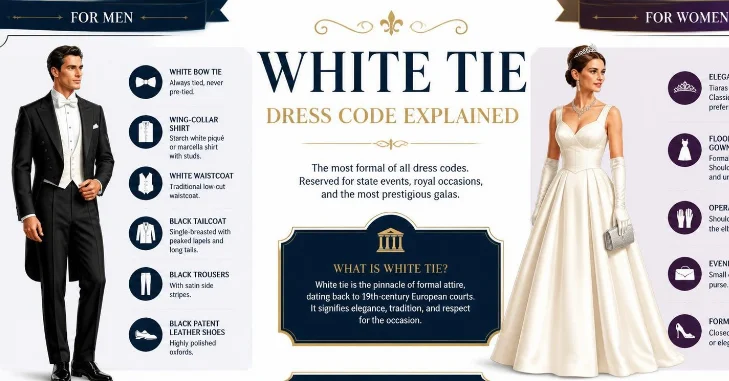
Traditional masculine attire follows a defined formula. A black evening tailcoat replaces the dinner jacket used for black tie. Matching formal trousers, usually featuring satin or braid along the outer seam, complete the foundation.
Under the coat, wear a stiff white formal shirt with a wing collar. Add a low-cut white piqué waistcoat and white bow tie. Shirt studs and cuff links provide the appropriate finishing details.
Black patent formal shoes are the conventional footwear choice. Black dress socks keep the lower half visually uninterrupted. Optional accessories can include a white pocket square, formal gloves, or an appropriate boutonnière.
Fit matters because this outfit uses strong proportions. The trousers normally sit higher than everyday suit trousers, while the waistcoat should remain controlled beneath the coat. A properly fitted ensemble looks cleaner than one assembled from similar-looking substitutes.
The Tailcoat Is Not a Regular Tuxedo Jacket
A conventional tuxedo jacket ends around the hips and has no long back tails. An evening tailcoat has a sharply cut-away front and extended back tails. That silhouette is one of the clearest visual differences between the two dress codes.
Don’t substitute a morning coat either. Morning coats have a different cut and belong to formal daytime dressing. If you’re renting formalwear, specifically request an evening tailcoat ensemble.
What Women Should Wear
Traditional feminine attire starts with a full-length evening gown. The hem should reach the floor rather than stopping at cocktail, knee, or typical midi length. Formal fabrics and polished construction help the gown match the event’s formality.
Silk, satin, velvet, chiffon, and other refined evening materials can work well. The exact silhouette can vary according to personal style and the event. A column gown, softly draped style, or fuller ball-gown shape can all suit the required formality.
Accessories should support the gown rather than make the outfit look crowded. Fine jewelry, an elegant clutch, and refined evening shoes are dependable choices. Long evening gloves remain traditional, although modern invitations and hosts may not always expect them.
If you’re considering black, Styleliza’s guide to black dresses for women explains how fabric and construction change a dress’s formality. For this event, focus specifically on its full-length formal options. A casual black maxi doesn’t automatically qualify as an evening gown.
White Tie vs. Black Tie
These dress codes aren’t interchangeable. Both require polished evening clothing, but the higher level follows narrower conventions. Black tie allows substantially more flexibility in garments, colors, and contemporary styling.
| Detail | White Tie | Black Tie |
| Formality | Highest traditional evening level | Highly formal evening level |
| Men’s jacket | Evening tailcoat | Tuxedo or dinner jacket |
| Men’s bow tie | White | Traditionally black |
| Waistcoat | White formal waistcoat | Optional depending on outfit |
| Women’s dress | Floor-length formal gown | Usually long eveningwear; event rules vary |
| Styling freedom | Limited | Greater |
| Typical U.S. use | State, diplomatic, ceremonial events | Weddings, galas, formal dinners |
The practical distinction is simple. Don’t respond to the stricter invitation by wearing your normal tuxedo unchanged. Likewise, a dress appropriate for many formal weddings may still fall short if it lacks full evening formality.
What Shoes and Accessories Work?
For traditional menswear, black patent formal shoes remain the safest option. Everyday business shoes can make the outfit look less formal beside a tailcoat. Keep socks black and avoid conspicuous casual details.
For gowns, choose shoes that complement the dress and suit the venue. A refined pump, sandal, or evening heel can work depending on the season. Comfort still matters because formal dinners and balls can involve hours of standing or dancing.
Jewelry should feel deliberate rather than overloaded. An evening bag should also remain compact and polished. The goal is a coherent formal look, not adding every dressy accessory you own.
Common White Tie Mistakes to Avoid
Because the rules are specific, small substitutions can noticeably change the formality. Most mistakes happen when guests treat this level as another name for black tie. Checking each garment before the event prevents last-minute compromises.
- Wearing a normal tuxedo instead of an evening tailcoat.
- Choosing a black bow tie instead of the required white one.
- Wearing a cocktail or midi dress instead of a floor-length gown.
- Confusing a morning coat with an evening tailcoat.
- Choosing casual footwear with otherwise correct formal clothing.
- Treating “white” as a required clothing color for every guest.
- Wearing an ordinary suit because it is dark and formal-looking.
A wedding creates one additional consideration. Guests should still respect the couple’s specific instructions about colors and traditions. The dress-code label establishes formality, but it doesn’t override other directions from the hosts.
How to Prepare for a White-Tie Event
Start planning early because the required pieces are less common than standard formalwear. Renting a complete tailcoat ensemble can make more sense than purchasing one for a single occasion. If you own the pieces, schedule alterations before the final week.
Gown shopping also benefits from extra time. Check the hem while wearing your intended shoes, then test walking and sitting. Proper undergarments and tailoring can matter as much as the gown’s color or decorative details.
Build the outfit as one complete look before the event. Photograph it from the front, side, and back to catch proportion problems. This simple check can reveal an awkward hem, visible waistcoat, or accessory imbalance.
For broader formal-dress inspiration, Styleliza’s dresses section can help you compare silhouettes and occasion-focused styling. You can also browse the site’s fashion guides when planning accessories and wardrobe combinations.
When Is White Tie Worn in the United States?
This level of dress is uncommon in everyday American social life. It is most closely associated with exceptionally ceremonial evening occasions. Examples can include state dinners, diplomatic functions, debutante balls, select charity events, and highly formal weddings.
Don’t assume an elegant venue automatically requires it. The host should state the requested dress code on the invitation or in the event information. When the wording is unclear, ask the organizer rather than guessing up or down.
Terms such as “full evening dress” or “tails” may indicate the same traditional level. Event-specific instructions still take priority. Follow those directions when they differ from general etiquette.
A Simple Final Outfit Check
Before leaving, compare your complete outfit against the invitation, not current party trends. Confirm the required garment, footwear, accessories, and overall level of formality. This matters more here than finding a novel interpretation.
Traditional masculine dress should clearly read as tails, a white waistcoat, a white formal shirt, and a white bow tie. Traditional feminine dress should clearly read as a full-length formal evening gown. Everything else should support those foundations rather than compete with them.
Styleliza focuses on practical fashion choices for real occasions. Its latest style inspiration can help you plan related outfits for less restrictive events. For this particular invitation, tradition remains the safest styling guide.
Frequently Asked Questions About White Tie
Is white tie more formal than black tie?
Yes. It is traditionally the highest Western evening dress code and sits above black tie. The clothing requirements are also narrower, particularly for traditional masculine formalwear.
A regular tuxedo generally belongs to the black-tie category. The stricter code calls for an evening tailcoat, white waistcoat, and white bow tie. Guests should follow the invitation rather than treating both terms as equivalents.
Does white tie mean you have to wear white?
No. The term does not instruct every guest to dress entirely in white. Traditional men’s clothing is mostly black and white, while gowns can appear in many appropriate colors.
Wedding guests should still consider normal wedding color etiquette. Hosts may also specify colors or additional rules. Use those event-specific directions to guide your final choice.
Can a woman wear a cocktail dress?
A standard cocktail dress is normally too casual for this level. Traditional guidance calls for a floor-length formal evening gown. The fabric, construction, and styling should also suit a highly ceremonial evening.
A long dress isn’t automatically formal enough either. Casual jersey maxis and beach-oriented styles don’t create the same effect. Look for genuine eveningwear, not length alone.
Can a man wear a normal tuxedo?
A conventional tuxedo isn’t the traditional outfit requested by this dress code. The correct jacket is an evening tailcoat with a sharply cut-away front. Pair it with specific white formal pieces.
If you don’t own tails, formalwear rental can be practical. Ask for the complete ensemble rather than renting pieces separately. That reduces the chance of mixing incompatible garments.
Are gloves required?
Gloves are traditional accessories, but modern expectations can vary by event. Long evening gloves may accompany a gown, while white or gray gloves can accompany traditional masculine attire. Host instructions should take priority.
Don’t let optional accessories distract from mandatory clothing. Correct foundational garments matter more than adding every historical detail. If you’re unsure, ask the event organizer about expected protocol.