
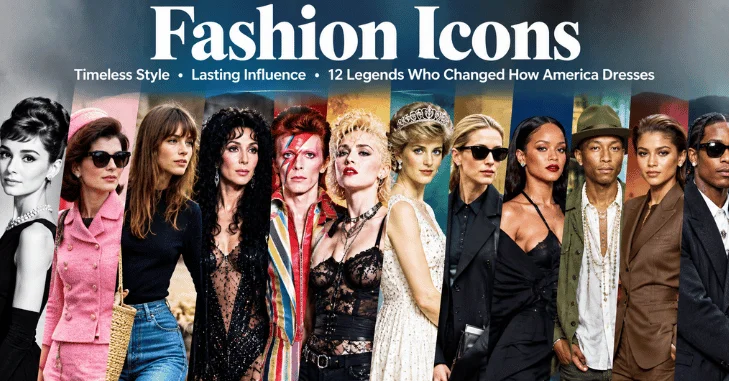
Fashion icons endure because they make clothes feel personal, memorable, and repeatable. Their strongest looks create a visual language people recognize instantly. The best examples also change how ordinary shoppers think about proportion, color, tailoring, or self-expression.
A true style icon does more than wear expensive clothes or follow trends. Their image stays recognizable across years, influences designers or everyday dressers, and offers ideas others can adapt. The most useful lesson is not copying a famous outfit exactly. It is understanding the choices that made that outfit feel theirs unmistakably.
| What to look for | Why it matters | Easy way to use it |
|---|---|---|
| Signature silhouette | Creates visual consistency | Repeat one flattering proportion. |
| Distinct color story | Makes outfits easier to recognize | Build around two or three favorite colors. |
| Memorable accessories | Adds identity without replacing basics | Choose one recurring bag, shoe, or jewelry shape. |
| High-low contrast | Makes polished outfits feel personal | Mix tailoring with denim, sneakers, or knits. |
| Consistent point of view | Separates style from trend chasing | Edit trends through your own wardrobe. |
Key takeaways
- Strong personal style usually relies on repetition, not constant novelty.
- The most memorable dressers balance consistency with occasional surprise.
- A signature can be a silhouette, color, accessory, fabric, or styling habit.
- Historical references work best when you adapt one principle at a time.
- You do not need luxury labels to build a recognizable visual identity.
What makes someone a true style icon?
Recognition matters, but consistency matters more. A strong dresser can change eras without losing a clear point of view. That continuity makes older photographs still feel useful instead of merely historical.
Influence also matters because style becomes iconic through repetition and imitation. The CFDA defines its Fashion Icon honor around significant impact on popular culture. Its honorees have included Rihanna, Pharrell Williams, Beyoncé, and Zendaya.
12 fashion icons and the style lessons worth borrowing

1. Audrey Hepburn: simplify the silhouette
Audrey Hepburn made cropped trousers, ballet flats, black dresses, and clean necklines feel permanently modern. Her relationship with Hubert de Givenchy reinforced a precise, elegant image on-screen and off. Vogue continues to document her wardrobe as a lasting reference for understated dressing.
The useful lesson is restraint. Choose one clean silhouette, remove unnecessary extras, and repeat what feels right. A black dress can do more work when the cut and accessories stay controlled.
2. Jacqueline Kennedy Onassis: build a clear wardrobe language
Jacqueline Kennedy Onassis made polished American dressing feel modern during her White House years. Oleg Cassini designs helped define the “Jackie look,” which stores copied across the country. The Smithsonian notes that her influence extended from dresses to hats and costume jewelry.
Her lesson is visual consistency. Structured coats, simple dresses, neat shoes, and bold sunglasses can form a clear wardrobe vocabulary. Styleliza’s modern preppy clothing guide can help translate that polished approach into everyday pieces.
3. Jane Birkin: let casual clothes carry personality.
Jane Birkin proved that denim, simple knits, white shirts, and a basket could become signature pieces. Vogue has repeatedly highlighted her flared jeans, skinny turtlenecks, peasant tops, and straw basket. The effect came from repetition and ease rather than formal styling.
Borrow the attitude instead of recreating a 1970s photograph. Wear familiar basics with relaxed proportions and one personal accessory. The result should look lived-in, not carefully themed.
4. Cher: use glamour as a point of view.
Cher turned stagewear and red-carpet dressing into an unmistakable extension of performance. Her long collaboration with Bob Mackie included beads, feathers, sheer fabrics, and body-conscious silhouettes. Their work helped popularize bolder forms of celebrity dressing.
Her lesson is commitment. A dramatic piece works best when the rest of the look supports its scale. Keep the hair, jewelry, or shoes intentional instead of adding several competing ideas.
5. David Bowie: treat clothing as creative identity
David Bowie used fashion to build distinct public personas across decades. Ziggy Stardust, sharp tailoring, glam-rock jumpsuits, and androgynous styling all became part of his visual history. Designers continued referencing those images on later runways.
The practical lesson is permission to change. Your wardrobe can evolve without becoming inconsistent if the choices still feel deliberate. Try one new proportion, color, or gender-fluid detail before changing everything at once.
6. Madonna: use contrast to make an outfit memorable.
Madonna repeatedly mixed lingerie, tailoring, religious references, streetwear, and performance costume. Her Jean Paul Gaultier cone bra from the 1990 Blond Ambition tour became a defining fashion image. Vogue documents how the collaboration combined masculine tailoring with feminine corsetry.
Contrast is the transferable idea. Pair a fitted top with wide trousers, or soft fabric with a structured jacket. One tension point can make simple clothes feel more considered.
7. Princess Diana: mix polish with off-duty ease
Princess Diana moved between formal royal dressing and remarkably casual off-duty outfits. Her style evolved toward cleaner, more self-directed choices as her public life changed. That progression helps explain why her wardrobe remains a recurring fashion reference.
The lesson is balance. A sweatshirt looks sharper with deliberate proportions, while tailoring feels easier with relaxed shoes. Styleliza’s 90s fashion guide offers more ideas for adapting that decade without copying it.
8. Carolyn Bessette-Kennedy: make minimalism specific
Carolyn Bessette-Kennedy built a strong identity from restrained colors and precise basics. Vogue continues to cite her coats, denim, headbands, simple dresses, and clean tailoring. Her wardrobe showed that minimal clothing can still feel highly personal.
Focus on fit, texture, and repetition. A narrow palette gives small details more weight, so shoes and outerwear matter more. This approach also explains why pared-back 1990s references remain useful today.
9. Rihanna: make unexpected combinations feel intentional.
Rihanna’s influence comes from combining references that might look unrelated to someone else. She has mixed lingerie with tailoring, streetwear with luxury, and classic accessories with oversized casual pieces. The CFDA gave her its Fashion Icon Award in 2014 for her cultural fashion impact.
Her lesson is controlled surprise. Start with one familiar base, then add one element that changes the mood. A formal jacket over relaxed denim often works because both pieces still have clear structure.
10. Pharrell Williams: ignore narrow menswear rules
Pharrell Williams has treated menswear as flexible rather than fixed. Shorts with tailoring, statement hats, jewelry, sneakers, and workwear have all appeared in his style history. The CFDA named him Fashion Icon of the Year in 2015.
His lesson is to test proportion before judging a category. A blazer does not require dress trousers, and jewelry does not need formal clothing. Try one unexpected pairing while keeping the colors controlled.
11. Zendaya: use fashion to support a story.
Zendaya often approaches major appearances as visual storytelling with stylist Law Roach. Her red-carpet history moves between archival references, character-inspired dressing, sharp tailoring, and sculptural gowns. The CFDA named her its Fashion Icon in 2021.
The lesson is context. Dress for the mood of the event, then connect that mood to your own preferences. Styleliza’s 2010s fashion guide shows how celebrity and social media styling changed outfit inspiration.
12. A$AP Rocky: treat menswear categories as ingredients
A$AP Rocky mixes traditional tailoring, streetwear, vintage references, pearls, denim, and technical pieces. The CFDA honored him with its Style Icon Award in 2025. His outfits frequently combine established menswear codes with unexpected styling choices.
The useful lesson is editing. Combine two different style categories, then stop before the outfit becomes crowded. Strong shoes or jewelry can provide enough contrast without another statement layer.
What these style icons teach about personal style
The common pattern is not wealth, fame, or access to designers. It is a repeated visual idea that becomes recognizable through use. You can build that same clarity with ordinary clothes already hanging in your closet.
Start by finding patterns in the outfits you already repeat. Notice your favorite proportions, colors, shoes, jackets, and accessories. Then keep the strongest elements while dropping pieces that never support them.
- Pick two silhouettes you know you enjoy wearing.
- Choose three colors that combine easily with your existing wardrobe.
- Keep one recurring accessory shape, such as a hoop, loafer, or structured bag.
- Save trend pieces for one part of the outfit at a time.
- Photograph ten favorite outfits and look for repeated choices.
How to use icon inspiration without looking like a costume
Begin with the principle behind a famous look instead of the exact clothes. Hepburn suggests restraint, while Cher suggests drama and Bowie suggests transformation. That approach leaves room for your climate, budget, body, and daily routine.
Choose one reference and combine it with current basics. A fitted jean can feel fresh beside a cleaner jacket and modern shoe. Styleliza’s skinny jeans guide explains how changing proportions can update a familiar silhouette.
Frequently asked questions
Who are some of the most influential fashion icons?
Influence spans film, music, politics, royalty, and street style. Audrey Hepburn, Jacqueline Kennedy Onassis, David Bowie, Princess Diana, Rihanna, and Zendaya represent different eras. Their impact comes from recognizable choices that continue influencing designers and everyday wardrobes.
What makes a person a style icon instead of simply fashionable?
A fashionable person can follow trends well, but an icon usually creates a recognizable point of view. Their choices stay memorable beyond one season or event. Repetition, cultural impact, and a distinct visual identity separate lasting influence from temporary attention.
Do I need designer clothes to develop iconic personal style?
No, because consistency depends more on choices than price. Repeating a strong silhouette, palette, and accessories can create identity with affordable clothing. Fit and editing usually matter more than a visible label.
How can I find my own signature style?
Start with outfits you already wear often and identify what repeats. Keep the shapes, colors, and details that consistently feel natural on you. Test one new idea at a time instead of replacing your wardrobe.
Build a wardrobe with a point of view.
Fashion icons are useful because they show how repetition can become identity. Choose principles that fit your life, then adapt them instead of copying complete looks. Your strongest wardrobe will feel recognizable to you before it feels recognizable to anyone else.
- Rewear what already works.
- Edit trends through your own preferences.
- Add new pieces only when they support your existing wardrobe.