
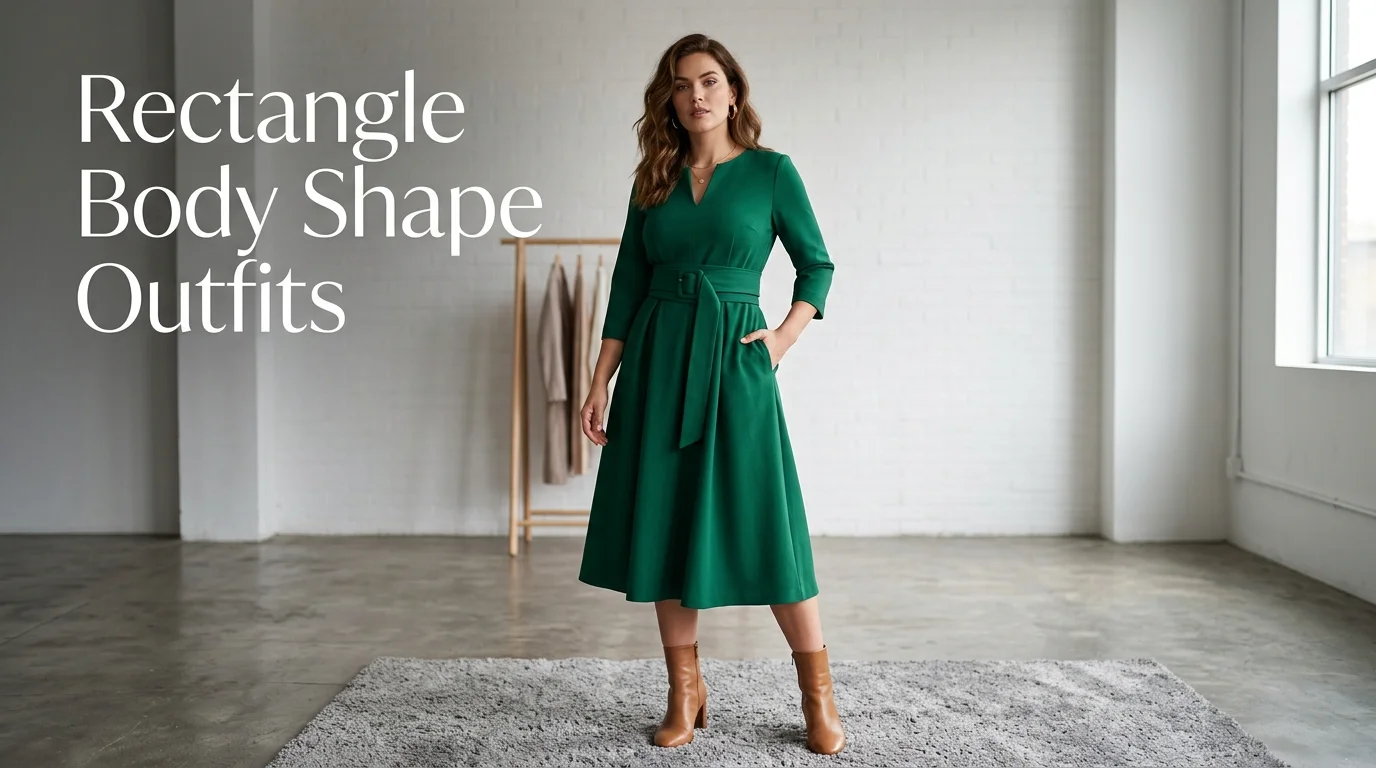
Finding great rectangle body shape outfits gets easier when you stop treating your proportions as something to fix. A rectangle shape often has similar shoulder and hip widths, with less waist contrast. You can define the waist, create volume, or highlight your naturally straight silhouette depending on the look you want.
The most useful outfits create intentional proportions through fit, length, texture, and layering. Cropped jackets can create a visual break, while wide-leg pants can add movement below the waist. Wrap dresses, fitted knits, and structured blazers give you even more ways to change the silhouette.
Rectangle Body Shape Styling at a Glance
| Clothing Area | Styles to Try | What They Do |
|---|---|---|
| Tops | Wrap, fitted, peplum, cropped | Create definition and visual interest |
| Jeans | High-rise, straight, flare, wide-leg | Change proportions through the lower body |
| Pants | Pleated, tailored, wide-leg | Add movement or structure |
| Skirts | A-line, pleated, bias-cut | Add shape around the hips |
| Dresses | Wrap, belted, fit-and-flare | Create a visible waist |
| Jackets | Cropped, shaped, belted | Break up a straight silhouette |
| Accessories | Belts, shoulder bags, necklaces | Direct attention to chosen areas |
Quick answer: The easiest way to dress a rectangle shape is to decide whether you want definition or a clean straight line. For more definition, use belts, tucks, cropped layers, wrap cuts, and fuller bottoms. Choose straight tailoring, column dresses, and longer layers when you prefer a sleek silhouette.
What Is a Rectangle Body Shape?
A rectangle body shape generally describes proportions where the shoulders and hips appear similar in width. The waist tends to have less visible indentation than in an hourglass shape. This can create a relatively straight line from the upper body through the hips.
Body-shape categories should work as styling references rather than strict rules. Height, torso length, bust size, shoulder structure, and individual proportions still affect how clothes fit. Two women categorized as rectangles may prefer completely different cuts and outfit formulas.
You also don’t have to create curves every time you get dressed. A straighter frame can carry streamlined tailoring, long coats, column dresses, and simple separates well. The goal is to choose an intentional silhouette that fits your personal style.
12 Rectangle Body Shape Outfits and Styling Ideas
The following ideas give you several ways to experiment with proportion. Some emphasize the waist, while others create volume through the shoulders or lower body. Use one technique at a time instead of adding every styling detail to one outfit.
1. Pair a Fitted Top With Wide-Leg Jeans
Start with a fitted T-shirt, bodysuit, or lightweight knit. Add high-rise wide-leg jeans to create more volume below the waist. Finish with sneakers, loafers, or chunky shoes based on the occasion.
The contrast between the fitted top and wider jeans creates a deliberate shape. A tucked top also creates a clear break between your upper and lower body. Choose a rise that feels comfortable rather than forcing an uncomfortable waist position.
2. Try a Wrap Top With Straight-Leg Pants
Wrap tops create diagonal lines across the torso and naturally draw attention toward the waist. Pair one with straight-leg pants for a clean outfit that doesn’t feel boxy. This combination can work for casual dinners, office days, or weekend plans.
You don’t need a dramatic wrap or deep neckline to get the effect. A softly tied blouse can provide enough definition while keeping the outfit understated. Add a compact handbag to keep the proportions neat.
3. Wear an A-Line Skirt With a Tucked Knit
An A-line skirt gradually widens below the waist and introduces movement around the hips. Pair it with a tucked fitted knit to make the waistline more visible. Knee-length and midi versions both work, depending on your height and preferences.
This formula is especially useful when you want a softer silhouette without relying on a belt. Boots can make the combination feel suited to fall and winter. Sandals, flats, or sneakers can take the same idea into warmer months.
4. Add a Cropped Jacket Over High-Rise Pants
A cropped denim jacket, bomber, or short blazer creates a clear horizontal break around your waist. High-rise pants can continue that effect by visually lengthening the lower body. Keep the layer underneath simple so the proportions remain easy to read.
Pay attention to where the jacket hem ends. A jacket finishing near your natural waist usually creates a stronger proportion change than an awkward mid-hip length. Try the outfit from several angles before deciding whether the crop works for you.
5. Choose a Belted Shirt Dress
A shirt dress gives you structure while a removable belt lets you control the amount of waist definition. Tie it at your natural waist for a more defined shape. Leave it looser when you want a more relaxed silhouette.
Look for fabric with enough movement to avoid stiffness around the torso. Rolled sleeves or an open neckline can make the outfit feel less formal. Add boots, loafers, or simple sandals to adjust it for different seasons.
6. Build a Monochrome Column Outfit
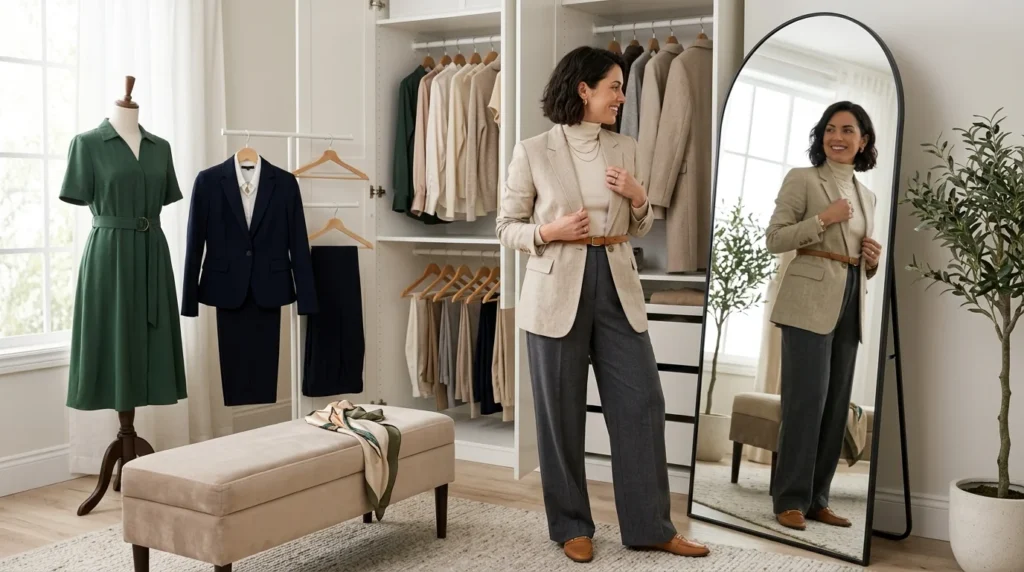
Not every rectangle outfit needs to emphasize curves. A tonal outfit can highlight the long, straight lines of your proportions instead. Try straight trousers with a coordinating knit and a long coat in similar shades.
The result can feel polished because the outfit follows one clear visual direction. Different textures prevent a monochrome combination from looking flat. For example, pair denim with knitwear or smooth trousers with a textured jacket.
7. Combine a Peplum Top With Simple Jeans
A peplum top adds controlled volume around the lower torso. Keeping your jeans relatively simple allows that shape to become the main design feature. Straight or gently flared denim works with this formula.
Check the position where the peplum begins before buying. A seam that sits close to your natural waist usually creates clearer definition. The top should still feel comfortable when you sit, bend, and move.
8. Try a Fit-and-Flare Dress
A fit-and-flare dress creates contrast between a closer-fitting upper section and a fuller skirt. This makes it an easy option when you want more definition without coordinating separates. Choose a waist seam that sits comfortably, not one that pulls upward.
Fabric changes the effect considerably. Crisp cotton creates a more structured shape, while softer fabric creates gentler movement. Keep accessories simple if the dress already has a strong silhouette.
9. Style a Blazer With a Defined Base Layer
A blazer can add structure around your shoulders while a fitted base layer keeps the torso visually clean. Wear it with straight jeans for casual outfits or tailored trousers for work. A slightly shaped blazer can provide more waist definition when desired.
You can also wear a blazer open to create vertical lines through the center of your outfit. That approach works well if you prefer less emphasis at the waist. Check shoulder fit first because poor shoulder placement can make even an expensive jacket look awkward.
10. Use a Belt to Change Familiar Outfits
A belt can transform pieces you already own without requiring a new wardrobe. Try one over a dress, cardigan, or lightweight blazer to see how the proportions change. Slim belts tend to create subtle definition, while wider styles make a stronger visual statement.
Comfort still matters more than achieving a specific shape. Sit down and move around while testing a belted outfit. If the belt constantly shifts or digs into your waist, the outfit may work better without it.
11. Pair a Relaxed Shirt With a Shaped Bottom
A relaxed button-down can work well when the lower half provides a contrasting silhouette. Try a partial tuck with an A-line skirt or high-rise trousers. The tuck creates a focal point without making the whole shirt fitted.
This combination also gives you room to adjust the outfit throughout the day. Leave more fabric untucked for a casual effect or create a cleaner tuck for work. Rolling the sleeves can add another intentional break in the silhouette.
12. Mix Texture Instead of Adding More Volume
Texture can add dimension when you don’t want ruffles, peplums, or fuller shapes. Try ribbed knitwear, suede, denim, leather, or softly pleated fabric. Combining two or three textures can make a simple outfit feel more considered.
Keep the color palette controlled when using several textures together. This prevents the outfit from becoming visually busy. Texture is particularly useful for minimalist wardrobes where silhouette changes are subtle.
Best Tops for a Rectangle Body Shape
Tops can change the way an outfit reads before you add accessories or layers. Wrap tops, cropped knits, fitted tees, peplum styles, and softly structured blouses each create a different effect. Choose them according to whether you want definition, volume, or a clean line.
Necklines can also guide attention around the upper body. V-necks create a central vertical line, while square and wider necklines can add more presence to the shoulders. No single neckline is required for everyone with these proportions.
If you love oversized shirts, you don’t need to remove them from your closet. Try a partial tuck, rolled sleeves, or a contrasting bottom to add structure. You can also leave the shirt loose when you want a straight silhouette.
Best Jeans and Pants for Rectangle Proportions
High-rise jeans are popular because they create a visible waistline and can make the legs appear longer. Wide-leg and flared styles introduce more volume below the hips. Straight jeans offer a cleaner option for anyone who wants to follow the body’s natural lines.
Mid-rise jeans can work equally well when they fit your torso more comfortably. Pocket placement, waistband construction, and fabric often matter more than the rise label alone. Try sitting and walking in jeans before deciding whether the fit works.
For trousers, pleats and wider legs can introduce movement around the lower body. Tailored straight pants can create a sharper, minimalist effect instead. Both approaches work because the goal is intentional proportion, not following one rigid rule.
Best Dresses for a Rectangle Body Shape
Wrap dresses are a useful starting point because their diagonal construction creates a natural focal point around the torso. Belted shirt dresses offer similar flexibility with a more structured appearance. Fit-and-flare styles add volume below a defined waist.
Column and slip dresses provide a different option by celebrating a straighter silhouette. Pair them with a long coat for a continuous line or a cropped jacket for contrast. Neither approach is inherently more flattering than the other.
Fabric should also influence your decision. Stiffer materials hold their shape, while draped fabrics follow the body’s natural lines. Think about the effect you want before focusing on a specific dress category.
Casual, Work, and Evening Outfit Formulas
Building a few repeatable formulas can make daily dressing faster. You can change colors, fabrics, and accessories while keeping the same basic proportions. This approach also helps you identify which pieces deserve space in your closet.
Try these combinations.
- Casual: fitted tee + wide-leg jeans + cropped jacket + sneakers.
- Weekend: tucked knit + A-line midi skirt + ankle boots.
- Work: shaped blazer + simple top + tailored trousers + loafers.
- Smart casual: wrap blouse + straight jeans + pointed flats.
- Dinner: wrap dress + compact shoulder bag + heeled boots.
- Minimal: column dress + long coat + simple leather shoes.
- Summer: fitted tank + flowing high-rise pants + black platform sandals.
Start with formulas that match clothes you already own. Then identify gaps instead of buying items because a body-shape checklist recommends them. This makes the advice easier to adapt to your budget and lifestyle.
Common Styling Mistakes to Reconsider
The biggest mistake is assuming your body must look curvier to look stylish. Waist definition is one option, not a requirement. A deliberately straight outfit can look equally considered when the fit and lengths work together.
Another issue is adding volume everywhere at once without considering the full outfit. Large sleeves, a loose torso, and a full skirt can compete for attention when combined. Pick one or two proportion changes and let them guide the look.
Don’t ignore comfort while chasing an ideal silhouette. A tight belt, restrictive waistband, or uncomfortable heel won’t be practical just because it follows a styling rule. Clothes should support your day as well as your preferred aesthetic.
How to Shop for Rectangle Body Shape Outfits
Start shopping with an outfit goal rather than a list of supposedly mandatory garments. Decide whether you want a defined waist, added lower-body movement, stronger shoulders, or a long column effect. That decision makes it much easier to evaluate individual pieces.
Take full-length fitting-room photos when possible. A mirror close-up helps you focus on one area instead of the entire outfit. Photos can help you compare hem lengths, volume, and overall proportions more objectively.
Finally, test every garment while moving. Sit, walk, reach, and turn before buying it. A piece that looks attractive while standing still may not deserve a place in your everyday wardrobe.
FAQ About Rectangle Body Shape Outfits
What outfits look good on a rectangle body shape?
Many silhouettes can work because rectangle proportions are naturally balanced. Wrap tops, wide-leg pants, A-line skirts, cropped jackets, and belted dresses can create more definition. Straight tailoring and column dresses are useful when you prefer to emphasize your natural line.
The key is making the silhouette look deliberate. Decide where you want the eye to travel before adding more details. Fit, comfort, and personal taste should guide the final choice.
How can I create more waist definition?
Try a belt, a tucked top, a cropped layer, a wrap construction, or a garment with a defined waist seam. High-rise bottoms can also create a clear visual break around the torso. You don’t need to use several of these techniques together.
Start with one change and compare the result. A simple half-tuck may provide enough structure for a casual outfit. Stronger definition can come from a belted dress or shaped jacket.
What jeans work well for a rectangle body type?
Straight, flare, bootcut, and wide-leg jeans can all work well. High-rise styles can emphasize the waist, while straight jeans can maintain a clean vertical line. Your ideal choice depends on the silhouette you want.
Fit should remain the deciding factor. Check the waistband, rise, pocket placement, and leg length rather than buying by cut name alone. Different brands can fit differently even when the labels match.
Can a rectangle body shape wear oversized clothing?
Yes, oversized clothing can create a stylish straight or relaxed silhouette. The outfit often looks more intentional when one element provides contrast through length, structure, or fit. For example, an oversized sweater can pair well with straight jeans or a cleaner skirt.
You can also use a partial tuck to create a visible midpoint. Cropped oversized jackets offer another way to combine volume with a clear break in proportions. There’s no need to avoid relaxed pieces.
Are belts necessary for rectangle shapes?
No, belts are optional styling tools. They can define the waist, but they aren’t required for a balanced outfit. Straight dresses, tailored trousers, oversized shirts, and long jackets can work without them.
Use a belt when it improves the outfit you want to create. Skip it when the garment hangs better without one. Personal comfort should always outweigh a body-shape formula.
Build Outfits Around the Effect You Want
Great rectangle body shape outfits don’t depend on hiding a straight frame or creating an hourglass shape every day. Your proportions give you room to experiment with both defined and streamlined silhouettes. The most useful styling choice is deciding which direction suits your outfit, occasion, and mood.
Start with clothes already in your closet and test one proportion change at a time. Try a cropped layer, a tuck, a wider pant, or a longer straight line before buying something new. Once you know which combinations feel natural, building a wardrobe around your shape becomes much simpler.