
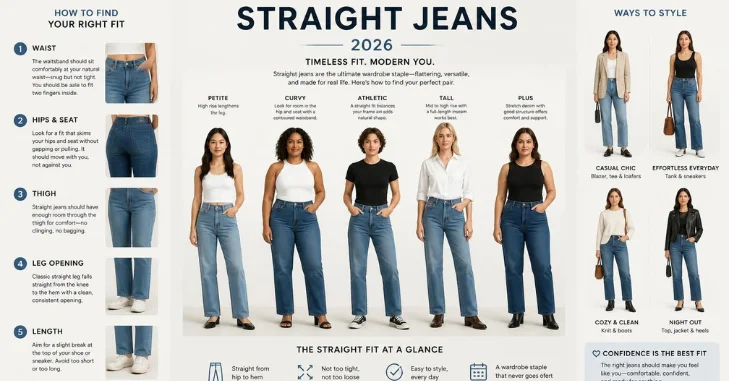
Straight jeans sit between a close skinny cut and a roomier wide silhouette. They create a clean line without gripping the calf or adding much volume. For 2026, that balance makes them easy to wear across casual, office, and evening outfits.
A good straight-leg pair should sit securely at the waist. It should skim the hips and thighs, then fall cleanly toward the hem. Choose the rise for comfort, then match the length to your most-worn shoes. In 2026, clean washes, simple layers, and intentional footwear keep the shape current.
| What to decide | Good starting point |
| Leg shape | A consistent line with no strong taper or flare |
| Waist | Secure without digging, rolling, or obvious gaping |
| Rise | Low, mid, or high based on comfort and your tops |
| Length | Ankle, full length, or a slight break over the shoe |
| Fabric | Rigid cotton for structure; low stretch for easier movement |
| Wash | True blue, dark indigo, black, or a clean light wash |
| Easy footwear | Slim sneakers, loafers, flats, boots, mules, or heels |
Key Takeaways
- Start with waist comfort, then check the hip, thigh, and hem.
- Pick a rise that works with tops you already wear.
- Match the hem length to your regular footwear before buying.
- Use cleaner washes for maximum versatility across work and weekends.
- Balance a simple lower half with one intentional layer, shoe, or accessory.
Are Straight Jeans in Style in 2026?
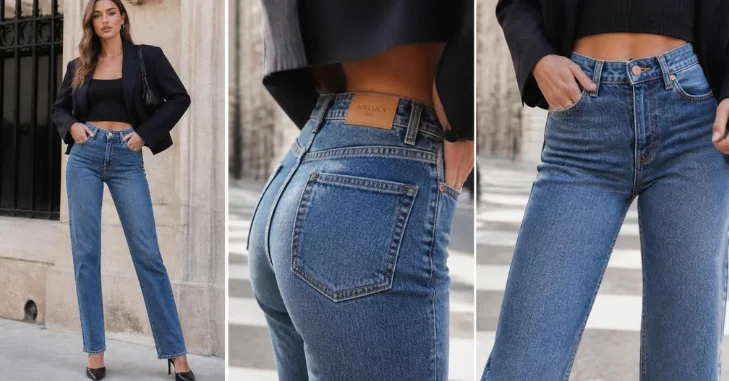
Straight jeans the silhouette remains current in 2026. Vogue’s fall denim trend report highlights straighter and slimmer legs returning to focus. The report also points to true-blue washes and familiar vintage-inspired shapes.
That shift does not make wide, bootcut, or relaxed denim obsolete. Current fashion offers several useful proportions at once. The practical move is choosing the cut that works with your wardrobe and daily routine.
What the Straight-Leg Cut Actually Means
A true straight leg stays relatively consistent in width as it moves toward the hem. It should skim rather than cling, and it should not flare sharply below the knee. H&M’s U.S. fit guide describes the shape as balanced between skinny and wide fits.
Brand labels can still vary, so the fitting-room view matters more than the tag. Some pairs look slim and tailored, while others feel relaxed through the thigh. Judge the line from the front and side before deciding whether the shape suits you.
How Should the Fit Feel?
Start with the waistband because every other proportion depends on it. You should be able to sit comfortably without the waist cutting into your body. The back should stay close enough to avoid constant pulling or obvious gaping.
Next, check movement through the seat and thigh. The fabric should fall without hard horizontal pulling lines when you stand. Walk, sit, and bend before judging the pair in a still mirror.
Use this checklist before deciding on the fit. Check it while standing, sitting, and walking. Small fitting-room problems often become bigger during a full day.
- The waistband stays secure without pinching.
- The seat lies smoothly without excess sagging.
- The thigh has enough room for normal movement.
- The calf isn’t tightly wrapped in fabric.
- The hem falls cleanly with your intended footwear.
Choose Rise and Length Before Wash
Rise changes how the whole outfit is proportioned. A high rise can create more waist definition, while a mid rise often feels neutral. A low rise works best when you already enjoy shorter tops or longer torso lines.
Length changes the mood just as much as rise. An ankle finish exposes more shoe, while full length creates a longer visual line. A slight break can feel relaxed, but heavy stacking may blur the clean shape.
For U.S. wardrobes, test the hem with real shoes whenever possible. Bring the sneaker, loafer, or boot height you wear most often. This small step prevents a good fit from becoming difficult to style at home.
Straight vs. Skinny, Mom, and Wide Cuts
| Cut | Leg line | Typical feel | Easy choice when |
| Straight | Consistent and clean | Skimming | You want an everyday middle ground |
| Skinny | Narrow from thigh to ankle | Close-fitting | You prefer a defined leg |
| Mom | Roomier thigh with ankle taper | Relaxed and shaped | You like waist emphasis |
| Wide | More volume through the leg | Loose and flowing | You want stronger proportion |
No cut is automatically more flattering for every body. Rise, fabric, pocket placement, and inseam can change the result substantially. Compare two nearby shapes in the same fitting session whenever you can.
If you prefer a closer line, Styleliza’s skinny denim guide explains how a narrow silhouette can look current. If you want more volume, use the same fit checks before moving wider. The goal is comfort, proportion, and repeat wear rather than a trend label.
7 Easy Outfit Formulas for Straight-Leg Denim
This silhouette works best as a dependable base, not the loudest item. Keep one part of the outfit intentional, then let the rest support it. These formulas cover common U.S. settings without requiring a separate wardrobe.
- White tee + slim sneakers: Add a belt or structured tote for a cleaner finish.
- Button-down + loafers: Use a small tuck if you want more waist definition.
- Fine knit + blazer + flats: Choose dark denim for a more polished office direction.
- Tank + cardigan + sneakers: This combination works well during changing spring or fall temperatures.
- Leather jacket + ankle boots: Keep the wash simple so the outerwear carries the stronger texture.
- Dressy top + pointed mules: A darker pair can move easily from dinner to drinks.
- Soft sweater + loafers: Keep the sweater near the hip so the proportions stay controlled.
Styleliza’s casual outfit formulas can help you build more combinations from familiar basics. Start with one formula and change only the shoe, layer, or color. That approach makes repeat dressing easier without making every look identical.
Shoes That Work With a Clean Straight Hem
Footwear should support the length, not fight it. Glamour’s 2026 shoe guide features slim sneakers, square-toe boots, slingbacks, and soft flats with this shape. The useful lesson is matching shoe weight to the hem and occasion.
Cropped lengths work well when you want the shoe fully visible. Full lengths can sit over boots, low-profile sneakers, or pointed footwear without much bunching. If you prefer heavier soles, Styleliza’s chunky loafer guide explains how to balance that weight.
Color also affects how polished the outfit feels. Dark brown, black, cream, and muted sneakers are easy starting points for fall. Brighter shoes can work when the rest of the outfit stays relatively quiet.
A Better Shopping Test for U.S. Buyers
Do not judge a pair only by the front mirror. Fit changes when you sit, walk, carry a bag, and wear your usual shoes. A practical fitting process gives you better information than chasing a size number.
Use this test before buying a new pair. Complete every step with your normal posture and movement. The goal is to catch problems before they follow you home.
- Sit for one minute and check the waistband.
- Walk several steps and watch for pulling at the thigh.
- Try two different shoe heights with the hem.
- Check the back pockets and seat from the side.
- Build three outfits using clothes you already own.
Fabric deserves attention because it changes after wear. Rigid cotton usually holds a sharper line, while low-stretch fabric can feel easier during long days. Follow the care label because washing and heat can also change the fit.
If you like distressed finishes, Styleliza’s ripped denim styling guide offers useful balance rules. For more versatility, keep stronger texture to one main area. Cleaner finishes are usually easier to repeat across workplaces, dinners, and weekends.
Make the Pair Earn Its Place
Before buying, picture the pair in three outfits you can wear next week. Test one casual look, one polished look, and one evening or weekend option. If all three feel easy, the silhouette is likely useful for your actual wardrobe.
Frequently Asked Questions
Who do straight jeans suit?
They can work across many body shapes because rise, width, and length are adjustable. The best version should support your proportions without forcing a specific body ideal. Choose the pair that stays comfortable while giving you the line you want.
Should the hem cover the shoe?
It depends on the length you prefer and the footwear you wear most. An ankle hem can clearly show flats, loafers, or slim sneakers. Full length can meet the shoe or create a small break without heavy pooling.
Is rigid or stretch denim better?
Rigid fabric gives a stronger vintage-style structure and often softens with wear. Low-stretch fabric can feel more forgiving during sitting, commuting, or travel. Neither is better for everyone, so test movement before choosing.
Can a straight leg work for business casual?
Yes, when your workplace allows denim and the finish looks clean. Dark indigo or black usually reads more polished than heavy fading or distressing. Add a button-down, fine knit, blazer, loafer, or simple boot based on your dress code.